
Soccer Training Load: More Work, Lower Cardiovascular Cost in Advanced Players?
By Dr. Joshua Villalobos, PhD
Founder, Synergy Athletic Solutions
STRIKES™ Applied Sport Science
Introduction
In our previous analysis, we explored a fundamental question in player development:
What actually separates Advanced soccer players from Competitive-level players?
The findings challenged the idea that development can be explained simply by talent or participation.
Advanced players demonstrated greater high-intensity running demands, greater positional physical workloads, and stronger technical attacking outputs—even though both groups completed the same training structure.
That led to one of the central principles emerging from the STRIKES™ framework:
Training exposure does not guarantee equal adaptation.
But those findings raise another question.
If Advanced players were capable of producing greater physical workloads, did they also experience greater physiological stress while doing so?
In other words:
What did that work cost them?
To answer that question, we need to move beyond what players did during training and examine how their bodies responded to that work.
That brings us to Cardio Load.
In this STRIKES™ Applied Sport Science video, Dr. Joshua Villalobos examines why the same soccer training environment can produce different physiological demands between players.
Our previous analysis focused primarily on differences in training output.
Distance covered, high-intensity running, and Muscle Load provide information about the external demands placed on the player.
Cardio Load provides another perspective.
In this research, cardiovascular demand was quantified using training duration and heart-rate response, providing an estimate of the player’s internal physiological response to training.
This distinction is important.
Two athletes can complete the same activity and produce similar or substantially different amounts of physical work without experiencing the same physiological cost.
That creates an important player-development question:
Could higher-level players be capable of producing more physical work while experiencing a lower relative cardiovascular demand?
The results suggest that under several important training conditions, this may have occurred.
Advanced Players Entered Training With Greater Aerobic Capacity
Before analyzing Cardio Load, we first need to understand the athletes themselves.
At baseline, Advanced players demonstrated significantly greater relative VO₂max than Competitive players:
Advanced: 51.04 ± 7.11 ml·kg⁻¹·min⁻¹
Competitive: 45.97 ± 5.01 ml·kg⁻¹·min⁻¹
p = .009
Advanced players also demonstrated superior 30-m sprint, agility, countermovement-jump, and velocity-at-VO₂max performance.
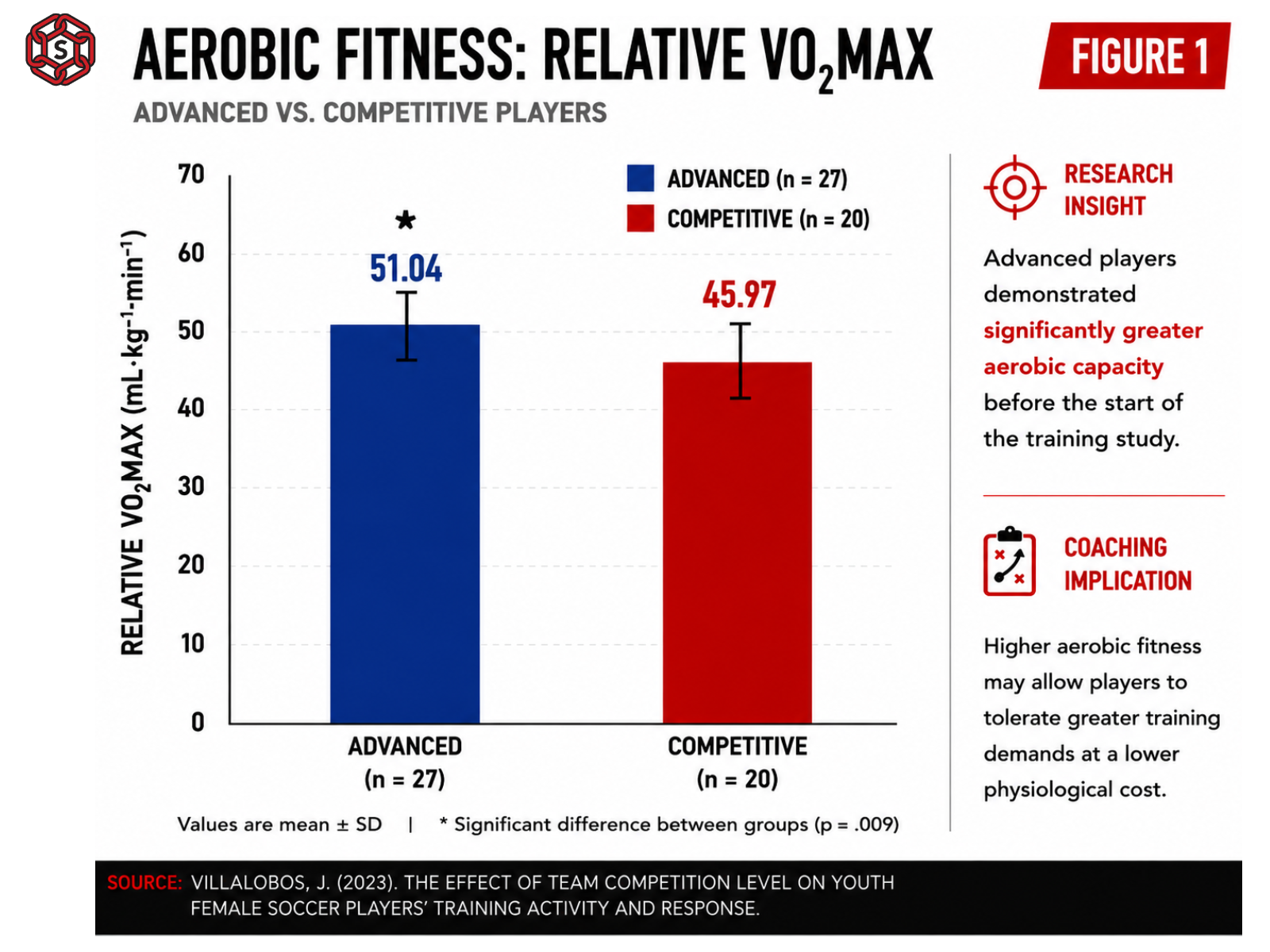
Figure 1. Advanced female soccer players demonstrated significantly greater relative VO₂max than Competitive players (p = .009), indicating greater baseline aerobic capacity.
This becomes particularly important when interpreting what happened during training.
The two groups were completing the same overall training structure, but they were not entering that environment with the same physical capacity.
The Average Can Hide the Athlete
One of the most informative findings from this analysis appears when we compare two different ways of examining Cardio Load.
When Cardio Load was collapsed into an overall average across the three training sessions, the groups appeared remarkably similar:
Advanced: 100.70 ± 17.11 a.u.
Competitive: 103.10 ± 19.74 a.u.
p = .702
Based only on this comparison, we might conclude:
Competition level did not meaningfully influence cardiovascular training demand.
But that would miss an important part of the story.
A repeated-measures analysis preserved the structure of the training data and examined Cardio Load in relation to time, competition level, tactical position, and training activity type.
Within that model, competition level had a significant effect:
F(1,193) = 21.12, p = .001
Advanced players experienced significantly lower Cardio Load than Competitive players:
MD ± SE = −2.06 ± 0.49 a.u.; p = .001
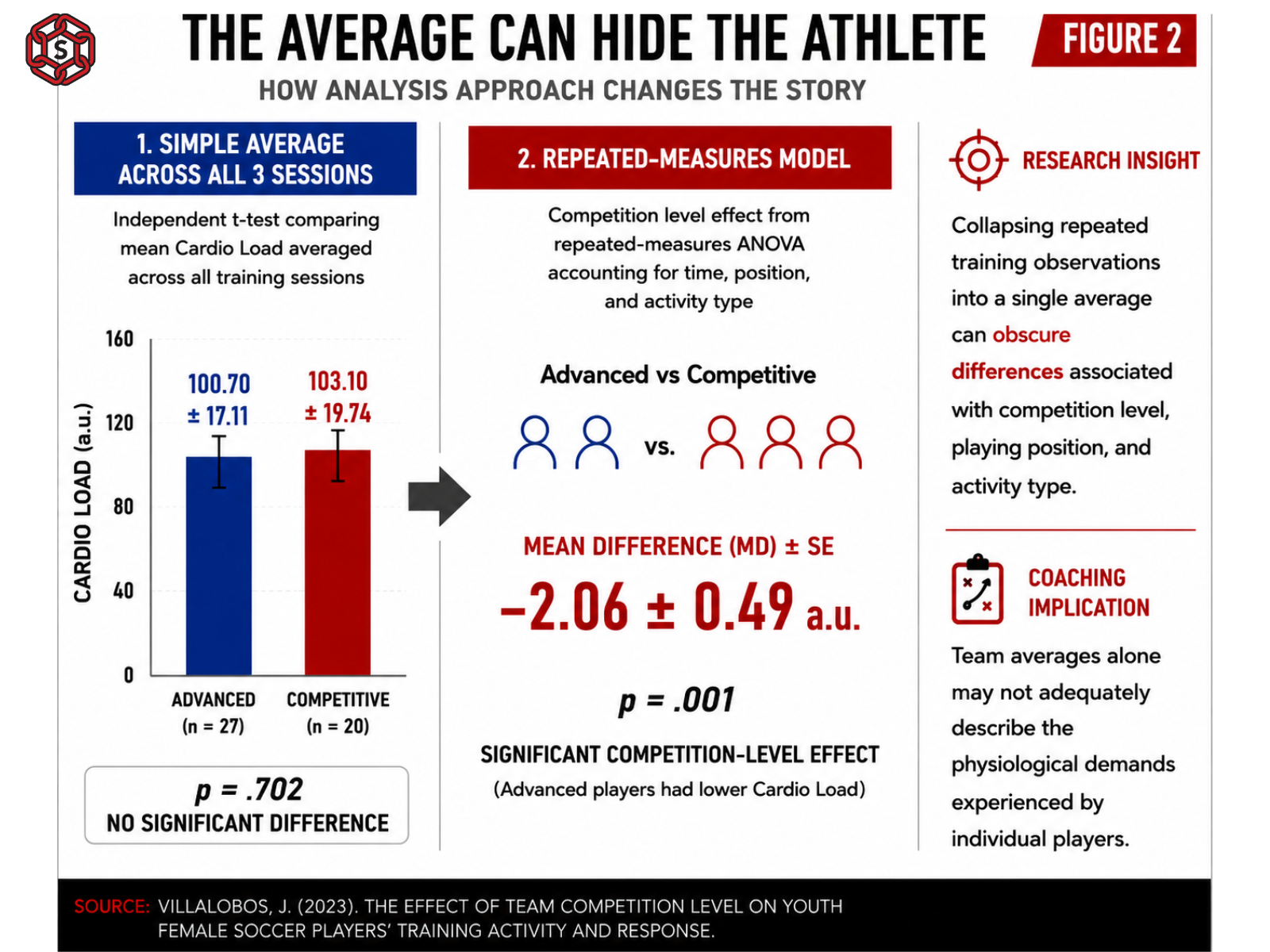
These findings are not contradictory.
The two analyses answer different questions.
The simple average asks:
If we reduce each player’s training exposure to one overall number, are the groups different?
The answer was no.
The repeated-measures analysis asks:
When we preserve the repeated structure of training and account for the conditions under which the workload occurred, does competition level influence Cardio Load?
The answer was yes.
This distinction leads to an important applied-sport-science principle:
The average can hide the athlete.
Team averages can be useful.
But they can also conceal meaningful differences in how individual players experience training.
How Playing Position Changes Physiological Demand
The importance of context becomes even clearer when Cardio Load is examined by tactical position.
Advanced midfielders experienced significantly lower Cardio Load than Competitive midfielders during:
Training Session 1 — p = .01
and
Training Session 3 — p = .02
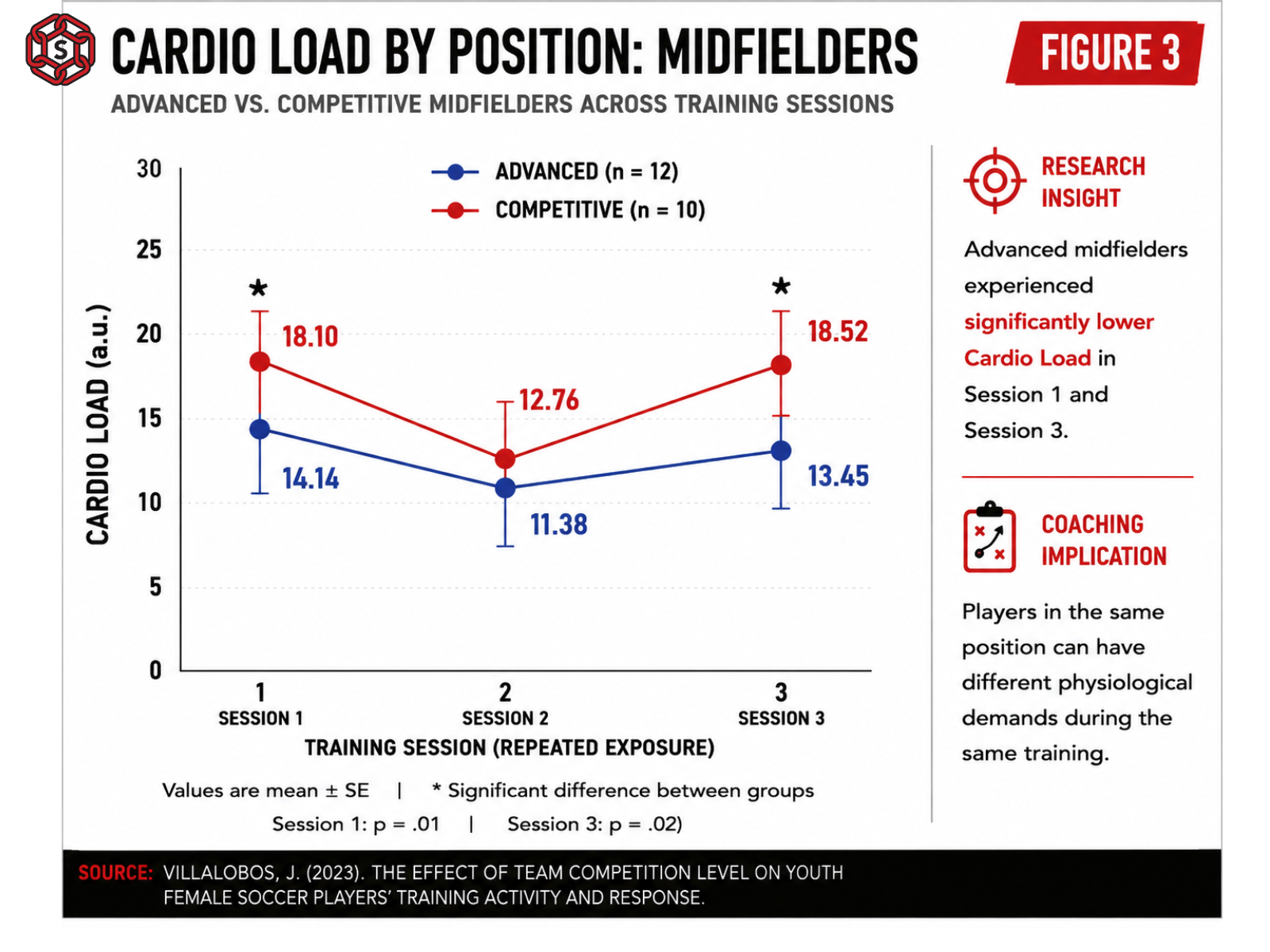
What makes this particularly interesting is how these findings relate to the external workloads observed in our previous analysis.
Advanced midfielders were simultaneously exposed to greater physical workloads.
The findings showed that Advanced midfielders experienced lower Cardio Load despite completing significantly greater Muscle Load and Total Distance.
That creates an intriguing pattern:
Greater external workload. Lower cardiovascular cost.
This does not prove that Advanced players were more physiologically efficient. Efficiency was not directly measured.
However, combined with their greater VO₂max and other superior baseline physical characteristics, the findings are consistent with the possibility that Advanced players possessed greater physical work capacity.
Cardio Load During 11v11 Soccer
Perhaps one of the most practically relevant findings occurred during full-sided soccer.
During 11v11 scrimmage activity, Advanced players experienced significantly lower Cardio Load than Competitive players during:
Session 1 — p = .004
Session 2 — p = .001
Across the activity analysis, Advanced players’ Cardio Load during 11v11 was:
6.62 ± 1.21 a.u. lower
than Competitive players.
p = .001
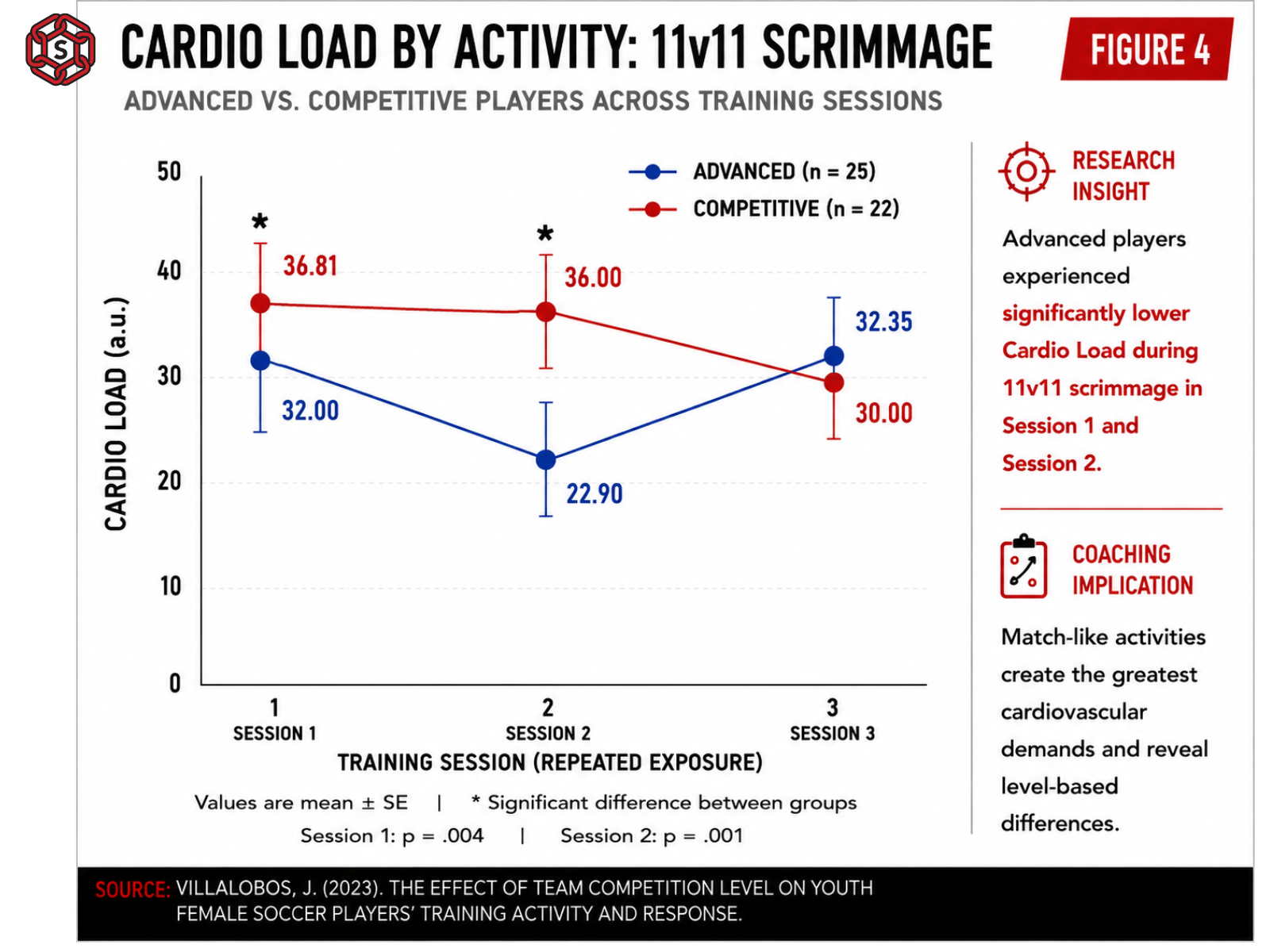
Again, this finding needs to be interpreted alongside the external workload data.
Advanced players were not simply avoiding physical work.
Our previous analysis showed that Advanced players frequently produced greater high-intensity running and external workload.
The cardiovascular findings therefore reinforce an important distinction:
Greater physical output does not necessarily equal greater physiological cost.
How Training Activity Changes Cardio Load
Cardio Load was also influenced by the type of training activity being performed.
There was a significant interaction between competition level and training activity:
F(6,193) = 3.26, p = .004
During Possession Activity #1, Advanced players experienced significantly lower Cardio Load overall:
MD ± SE = −2.85 ± 1.18 a.u.; p = .02
However, Possession Activity #2 demonstrates why these results cannot simply be reduced to:
Advanced players always have lower Cardio Load.
During Session 2, Advanced players actually experienced greater Cardio Load than Competitive players (p = .001).
During Session 3, the relationship reversed: Advanced players experienced lower Cardio Load (p = .003).
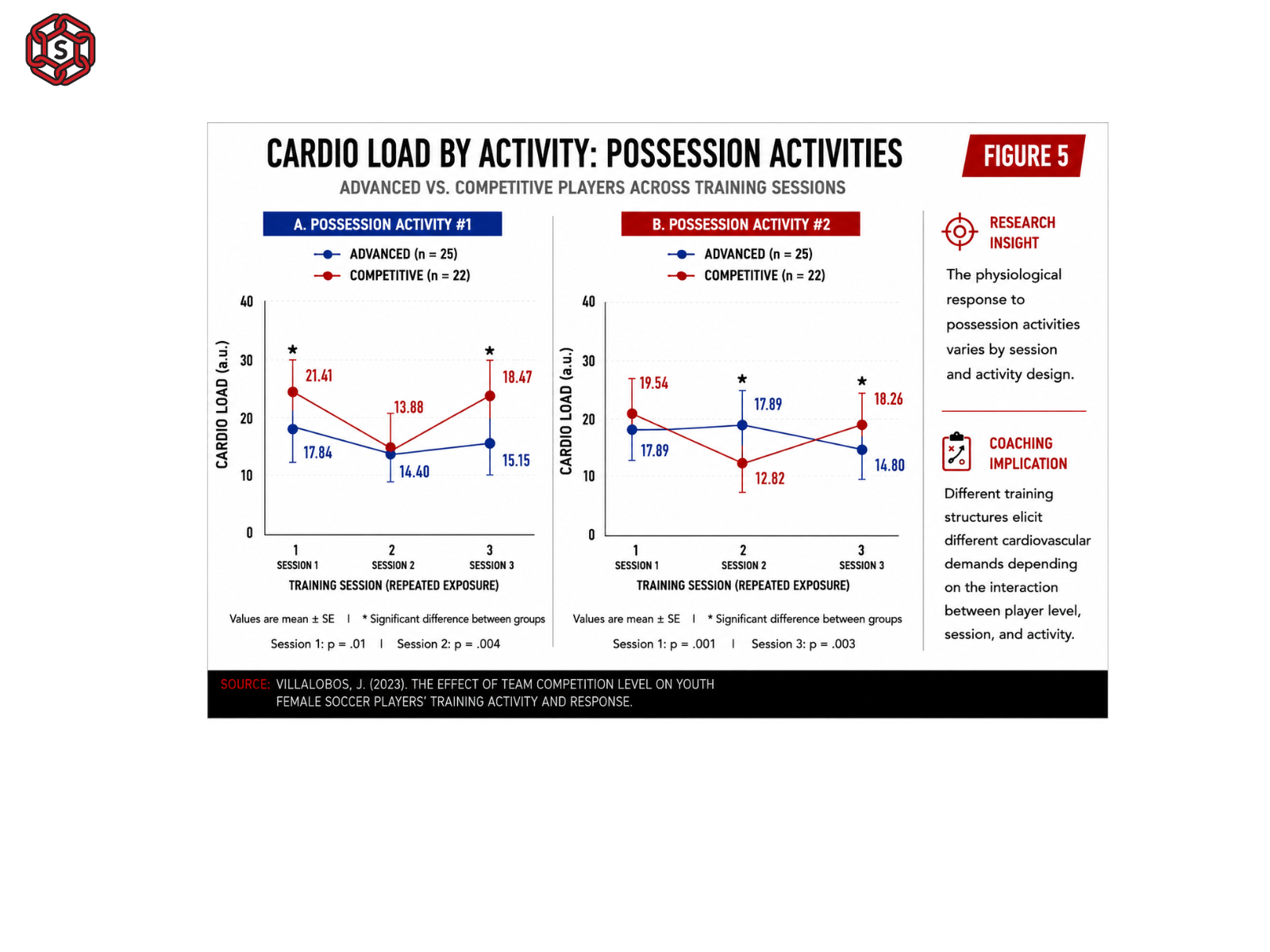
This tells us something much more useful than a simple group comparison.
Cardiovascular training demand appears to emerge through an interaction between:
PLAYER × POSITION × ACTIVITY × SESSION
The drill matters.
But so does the athlete performing it.
Why the Same Soccer Training Does Not Mean the Same Stimulus
This brings us directly back to the larger player-development question.
Players completed the same activities, training volume, and overall structure, yet different external workload and technical-performance outcomes emerged.
This analysis adds another layer:
Their internal physiological responses were different too.
Two players can perform the same possession exercise.
Play the same 11v11 game.
Train for the same duration.
And still experience meaningfully different:
- physical workloads
- cardiovascular demands
- positional demands
- technical actions
- recovery requirements
This challenges one of the simplest assumptions in team training:
Same drill = same stimulus.
It doesn’t.
The training environment interacts with the athlete.
The STRIKES™ Applied Player Development Model
Our previous analysis established an important principle:
Training exposure does not guarantee equal adaptation.
The current findings extend that principle:
Training exposure does not guarantee equal physiological stress.
When these findings are considered from an applied player-development perspective, training can be viewed as a repeating adaptive cycle.
Within the STRIKES™ Applied Player Development Model:
Physical Capacity → Training Output → Internal Physiological Response → Recovery + Adaptation → Future Capacity
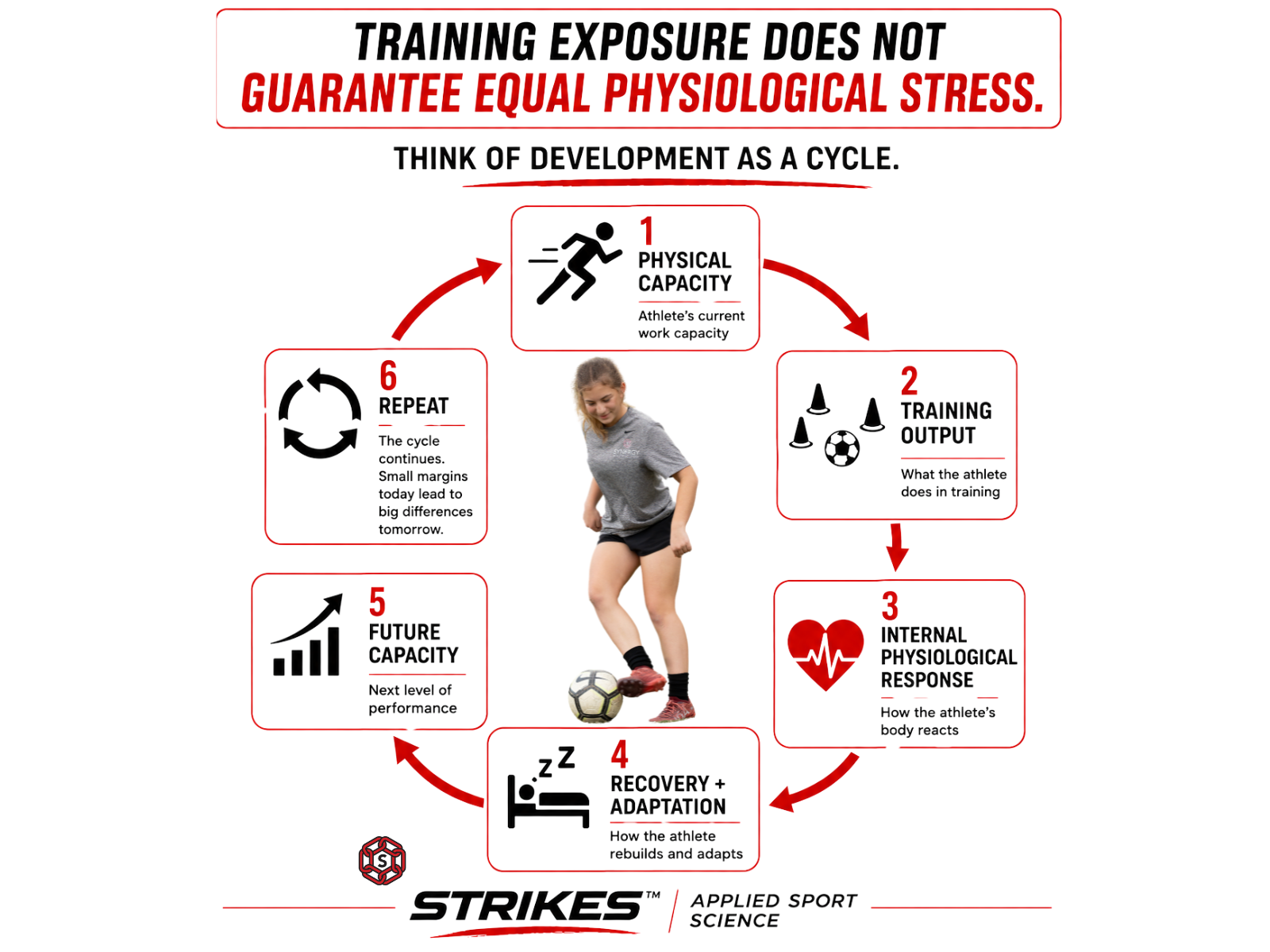
Figure 6. STRIKES™ Applied Player Development Cycle. A conceptual framework illustrating the interaction between an athlete’s physical capacity, training output, internal physiological response, recovery and adaptation, and future performance capacity.
An athlete begins with their existing physical capacity.
That capacity influences the training output they are capable of producing.
The training output creates an internal physiological response.
The athlete then moves through recovery and adaptation.
Those adaptations contribute to future physical capacity.
And then the cycle repeats.
This creates an important way of thinking about player development:
The same training environment may not create the same position within this cycle for every athlete.
Players enter training with different capacities. They may produce different outputs, experience different internal demands, and potentially require different recovery or supplementary training strategies.
Over time, small differences within this cycle could potentially contribute to larger developmental differences.
The word could is important.
This research examined acute training responses. It does not establish that the differences observed here cause long-term developmental separation.
Determining whether these acute differences contribute to long-term developmental outcomes will require longitudinal research following athletes across longer periods of development.
The model should therefore be viewed as an applied framework for interpreting and investigating player development, rather than proof of a long-term causal mechanism.
Practical Implications for Soccer Coaches and Clubs
The practical takeaway is not that lower Cardio Load is always better.
Nor is higher Cardio Load automatically desirable.
Instead, coaches should consider two questions together:
What did the player accomplish?
and
What did it cost them physiologically?
That relationship may provide considerably more information than either metric alone.
It also raises important questions for player development:
Are some players receiving an insufficient stimulus from team training?
Are other players accumulating excessive physiological stress?
Do different positions require different supplementary workloads?
Should activity duration or constraints be manipulated for specific players?
Are team averages masking individual developmental needs?
These are ultimately programming questions.
And they cannot necessarily be answered by looking at the training plan alone.
The more useful question may be:
What stimulus did this individual athlete actually receive?
Conclusion: Understanding the Athlete, Not Just the Drill
Our previous analysis established that Advanced players often performed more work.
The current evidence indicates that they did not necessarily pay a greater cardiovascular cost for producing that work.
When Cardio Load was reduced to one overall average, the groups appeared similar.
When the structure of training was examined more closely, competition level significantly influenced cardiovascular response.
And those differences depended on position, activity, and session.
The larger lesson is therefore not simply about heart rate.
It is about how we understand training.
The athlete’s response cannot be understood from the drill alone.
The same environment can produce different physical and physiological demands in different players.
Same training does not mean same stimulus.
And sometimes:
The average can hide the athlete.
Next in STRIKES™
What Physical Qualities Actually Separate Advanced Soccer Players?
In the next STRIKES™ research analysis, we’ll examine VO₂max, sprint speed, agility, countermovement-jump performance, and velocity at VO₂max to determine which physical characteristics differentiated Advanced and Competitive female soccer players.
📺 Explore More STRIKES™ Applied Sport Science Content
Synergy Athletic Solutions Applied Sport Science in Soccer – YouTube Channel
⚽ Synergy Athletic Solutions
https://synergyathleticsolutions.com/
© 2026 Synergy Athletic Solutions — STRIKES™ Applied Sport Science