
Introduction
Soccer is a global sport rooted in creativity, intelligence, and athleticism. My own path—from player to coach, researcher, and applied practitioner—has led me to study the sport from both scientific and experiential angles. Through Synergy Athletic Solutions, my mission is to help athletes and organizations maximize performance through a modern, integrated, evidence-informed approach.
Today, I support:
-
- Atlanta-area players and teams striving to reach new performance levels
- Research in youth soccer, focusing on training demands, talent identification, and development
- SSA Swarm FC’s sport science initiatives, where I serve as Head of Performance
This article brings together foundational sport science principles, practical training insights, and applied case-study outcomes to help players, families, coaches, and performance professionals better understand how to elevate soccer performance.
Soccer Performance Is Beautiful—and Complex
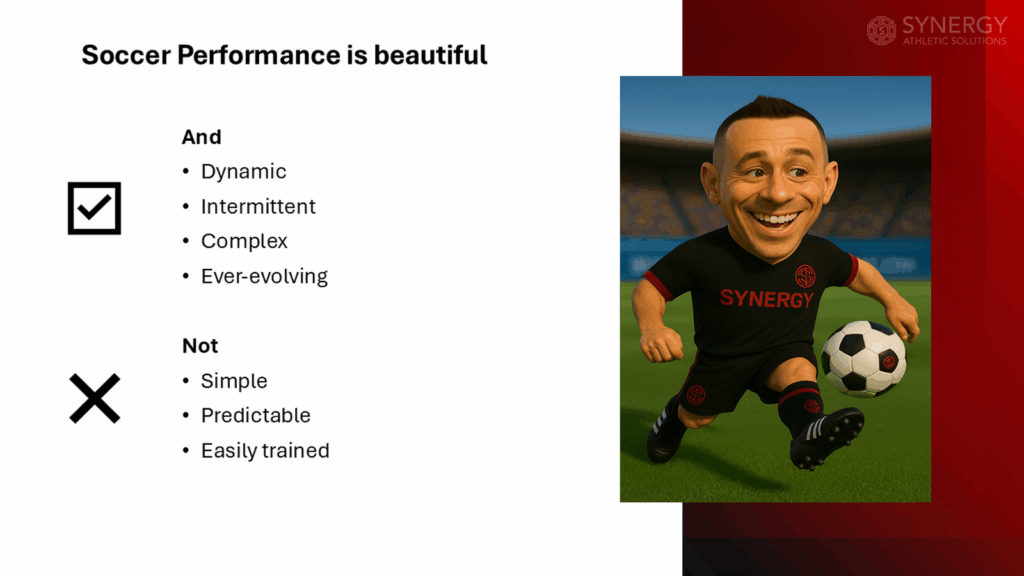
Soccer is often called “The Beautiful Game” because of its fluidity and spectacle. Yet beneath what spectators see lies intricate, dynamic performance.
Soccer is:
-
- Dynamic — constantly changing
- Intermittent — intense bursts mixed with lower-intensity phases
- Complex — requiring multi-domain excellence
- Ever-evolving — tactically, physically, and stylistically
Soccer is not:
-
- Simple
- Predictable
- Easily trained
Players who appear “effortless” have mastered layers of deeply rehearsed complexity.
Why Train?
The primary aim of training is to increase the likelihood that players develop and maintain the “capacity and readiness” required for competition.
High-quality training creates:
-
- Technical consistency
- Tactical intelligence
- Physical readiness
- Psychological resilience
“Activity” is not the same as “training.” Intentional practice creates order, development, and progress. Unstructured training creates chaos.
The Pillars of Soccer Performance
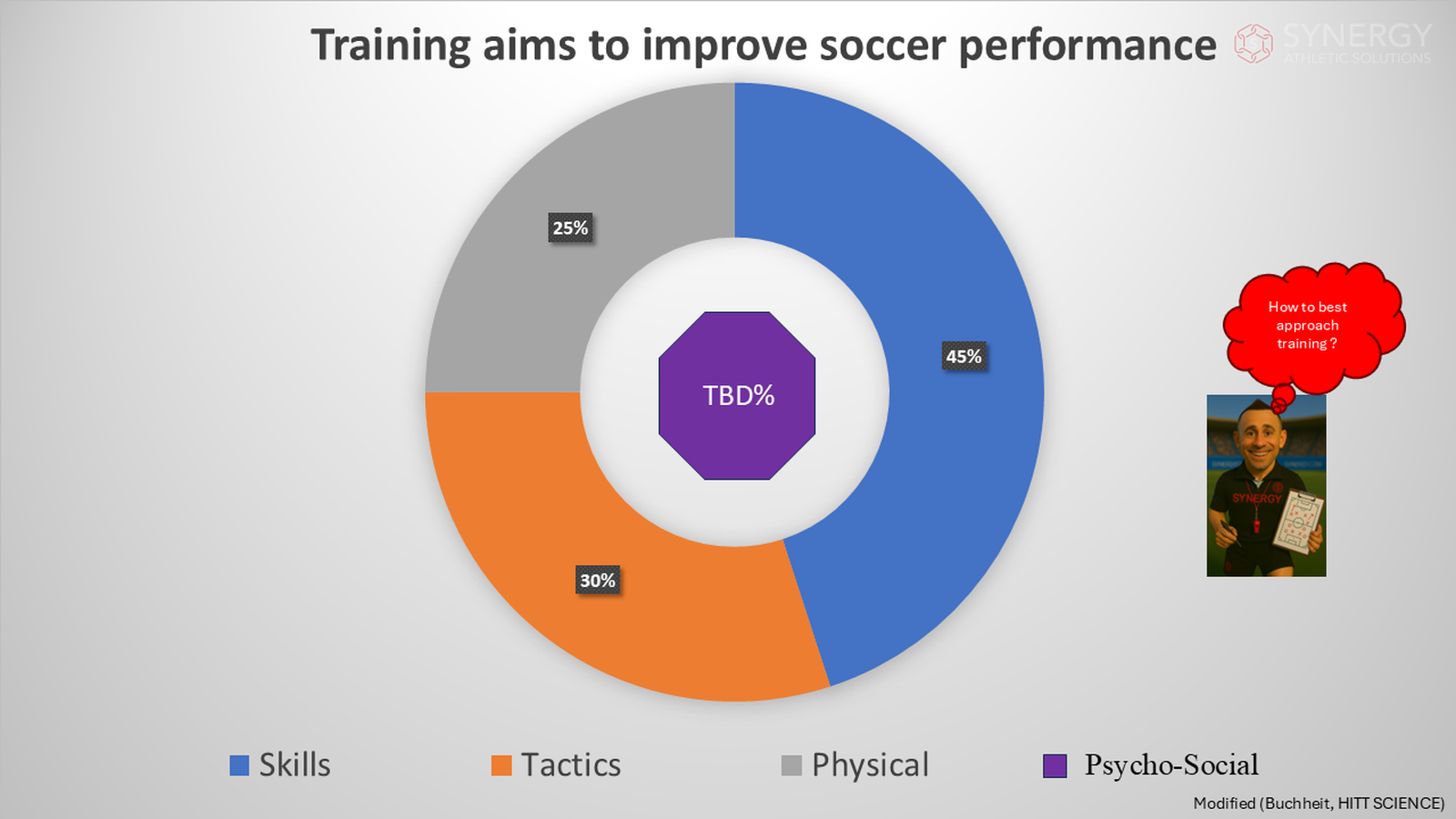
Adapting a performance framework inspired by Martin Buchheit (HITT SCIENCE), soccer performance is shaped by four primary domains:
1. Technical (Skills)
Execution of dribbling, passing, striking, receiving, heading, etc.
2. Tactical (Soccer Intelligence)
Decision-making, spatial awareness, principles of play, problem-solving
3. Physical (Capacity to Execute)
Speed, power, endurance, agility, strength, repeatability
4. Psycho-Social (Mindset + Integration)
Mentality, emotional control, coachability, communication, team belonging
Core Reality
Team training alone rarely satisfies the individual developmental needs within these four domains.
Sport Science Principle #1: Training Specificity
Training must be specific to the desired performance outcome.
Example: A player needs to improve 1v1 attacking behaviors. If team training focuses heavily on possession and “two-touch” play, this individual developmental need will not be met.
Targeted improvement requires:
-
- Drill selection that mimics real game constraints
- Technical complexity
- Decision-making speed
- High repetition with variability
Specificity drives progress.
Training Considerations for Players, Parents, and Coaches
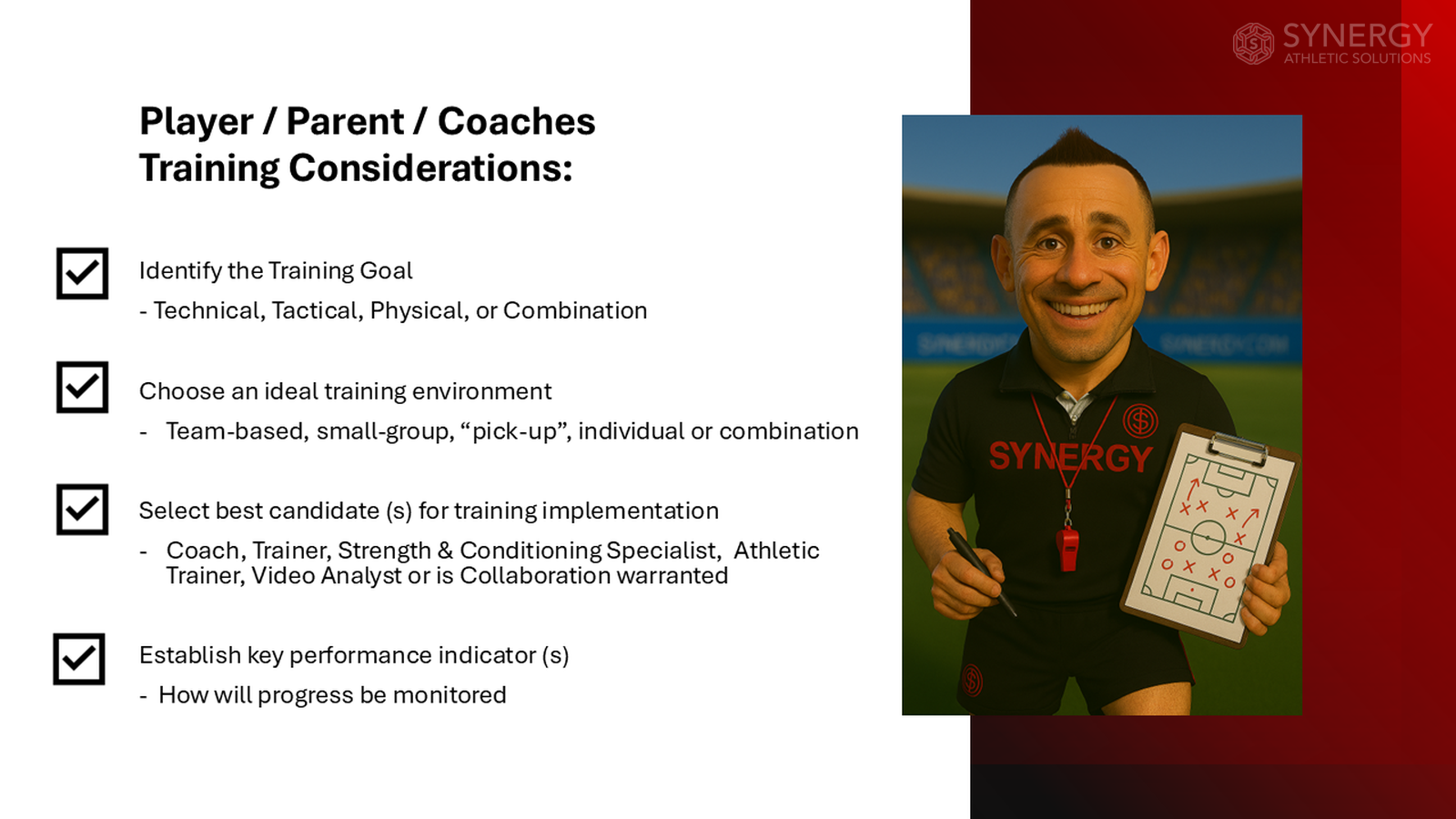
Any training plan should address four foundational questions:
1. What is the training goal?
Technical, tactical, physical, psychological—or a combination
2. What is the ideal training environment?
Team sessions, small group, individual, pick-up, hybrid
3. Who is best suited to deliver the training?
Coach, trainer, S&C coach, athletic trainer, sport scientist, analyst—or a collaborative team
4. How will progress be measured?
Clear key performance indicators (KPIs) and monitoring strategy
Intentional training is measurable training.
Technology and Data: Only Valuable When They Increase Precision
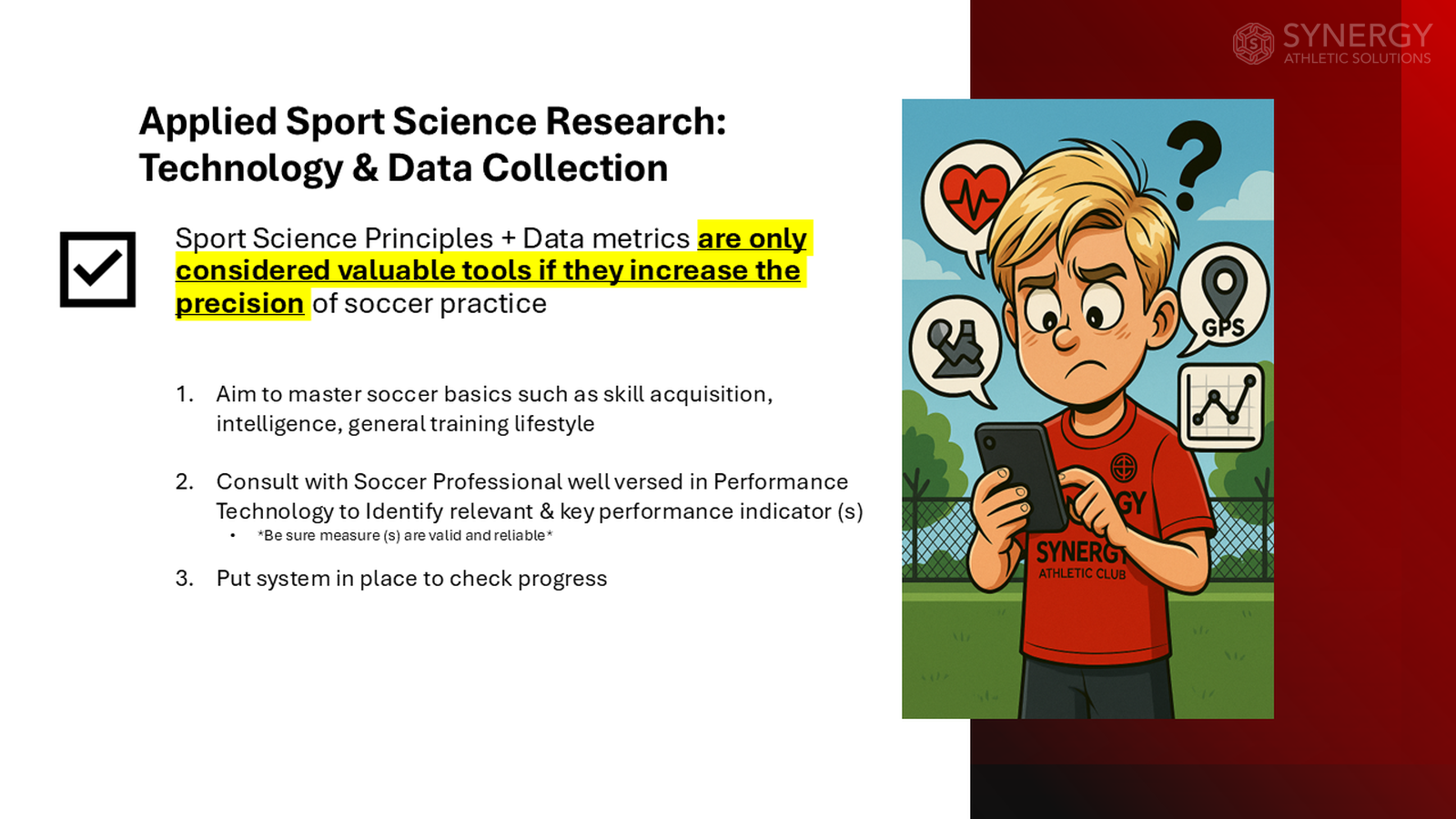
Wearable tech, GPS systems, heart-rate data, and force-plates are powerful—but only when used properly.
Appropriate uses include:
-
- Guiding return-to-play
- Understanding training response
- Structuring weekly periodization
- Evaluating long-term adaptation
Providing objective feedback
Critical Guideline
Not all metrics worth measuring are worth using.
Expert interpretation is essential.
Case Study: NCAA Division II Female Midfielder
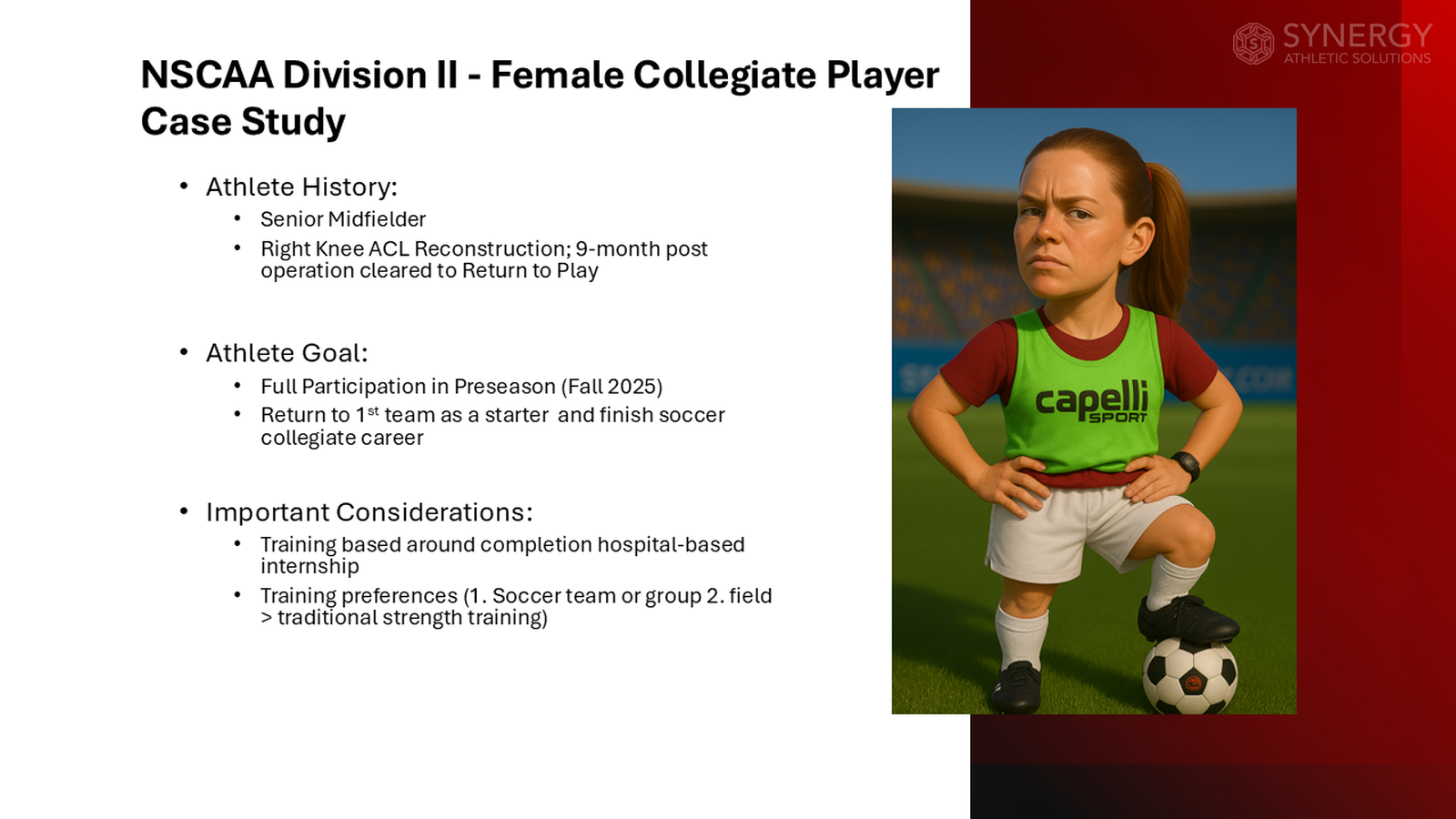
Athlete Background
-
- Senior midfielder
- 9 months post–ACL reconstruction
- Medically cleared to return to full activity
Athlete Goals
-
- Fully participate in Fall 2025 preseason
- Earn a starting position
- Finish collegiate career strong
Important Constraints
-
- Internship schedule (hospital-based)
- Preferred on-field over weight-room training
- Prefers training within group or team environments
8-Week Action Plan
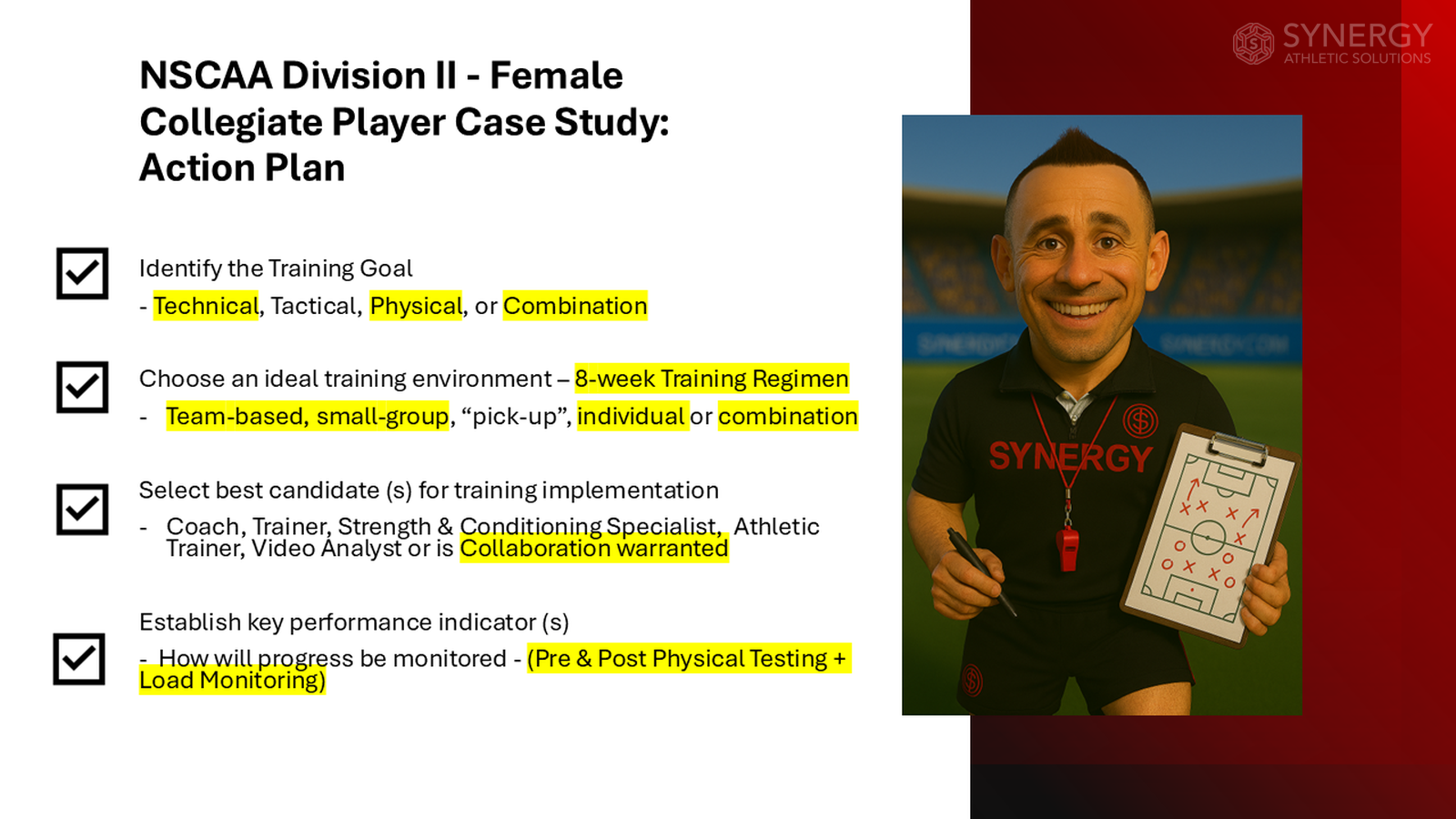
Training consisted of:
-
- 6–8 hours/week of field-based technical + physical work
- Team, small-group, and individual sessions mixed biweekly
- Integrated training staff: soccer coach, S&C, and sport science
- Pre/post performance testing + load monitoring
The goal: improve readiness, capacity, and confidence leading into preseason.
Aerobic Performance
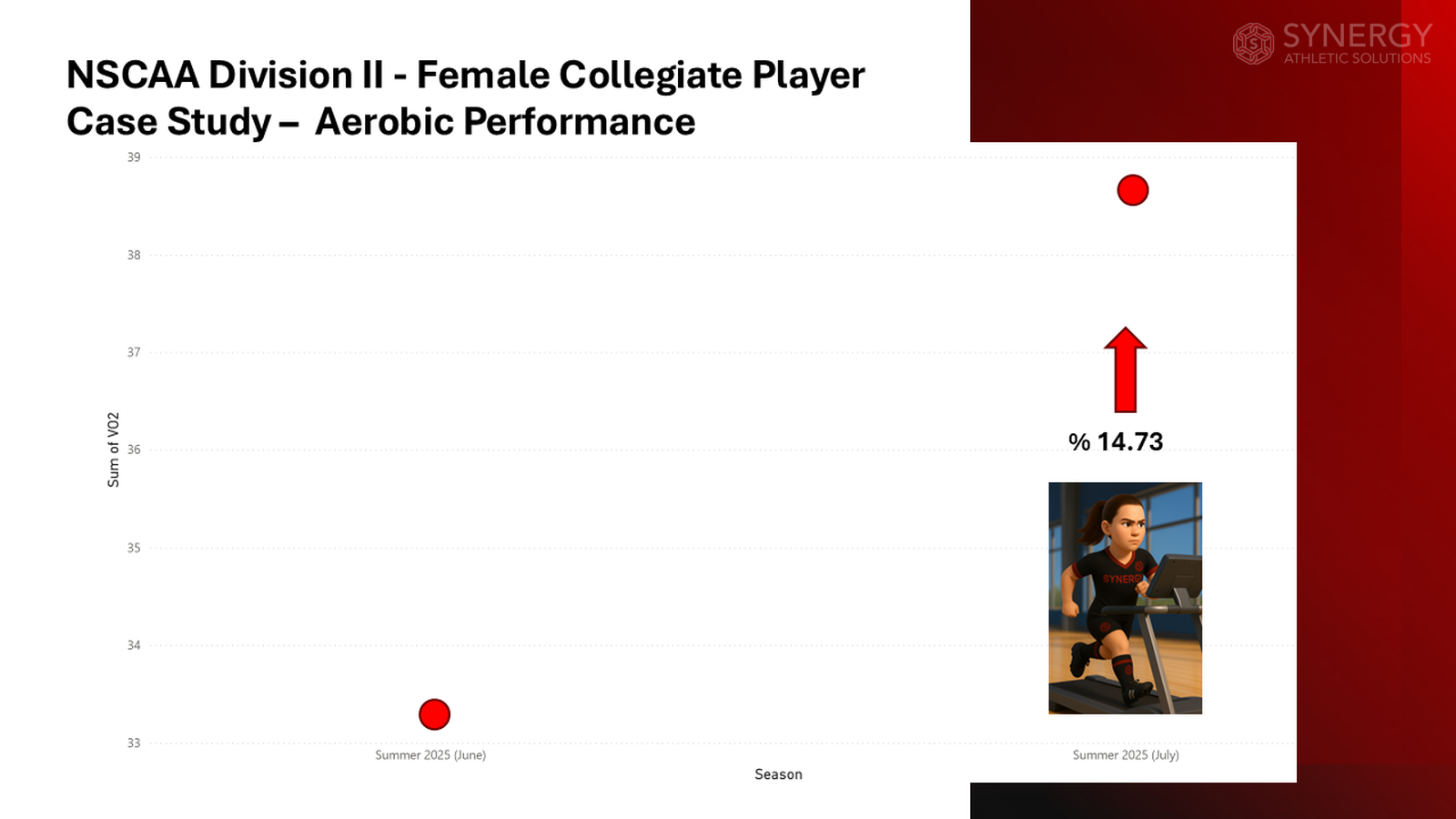
VO₂ Max Increase: +14.73%
A substantial improvement in aerobic power, critical for midfield positional demands.
Velocity @ VO₂ Max
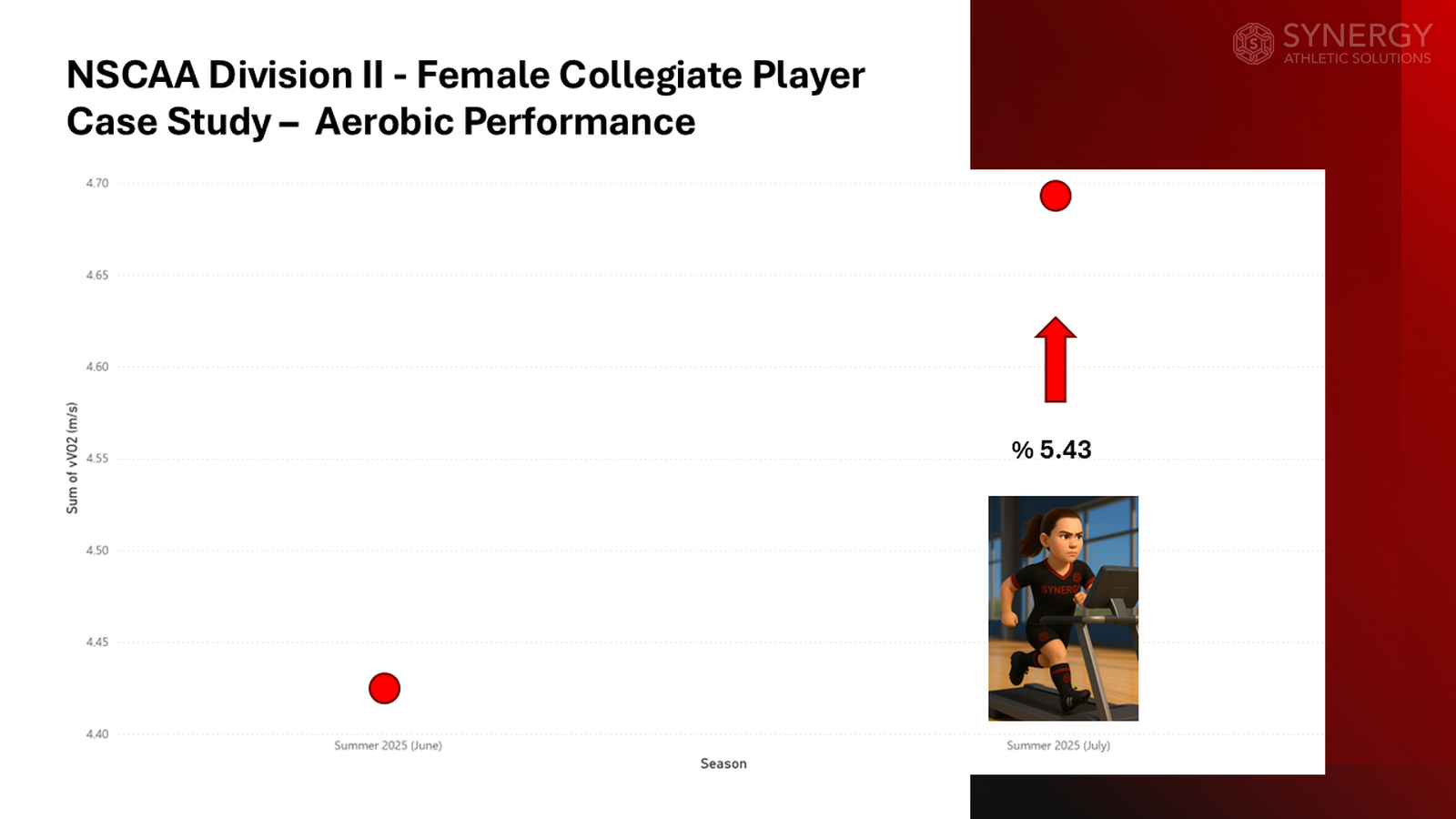
Peak Aerobic Speed Increase: +5.43%
The athlete sustained higher speeds for longer before exhaustion.
Anaerobic Performance: Acceleration
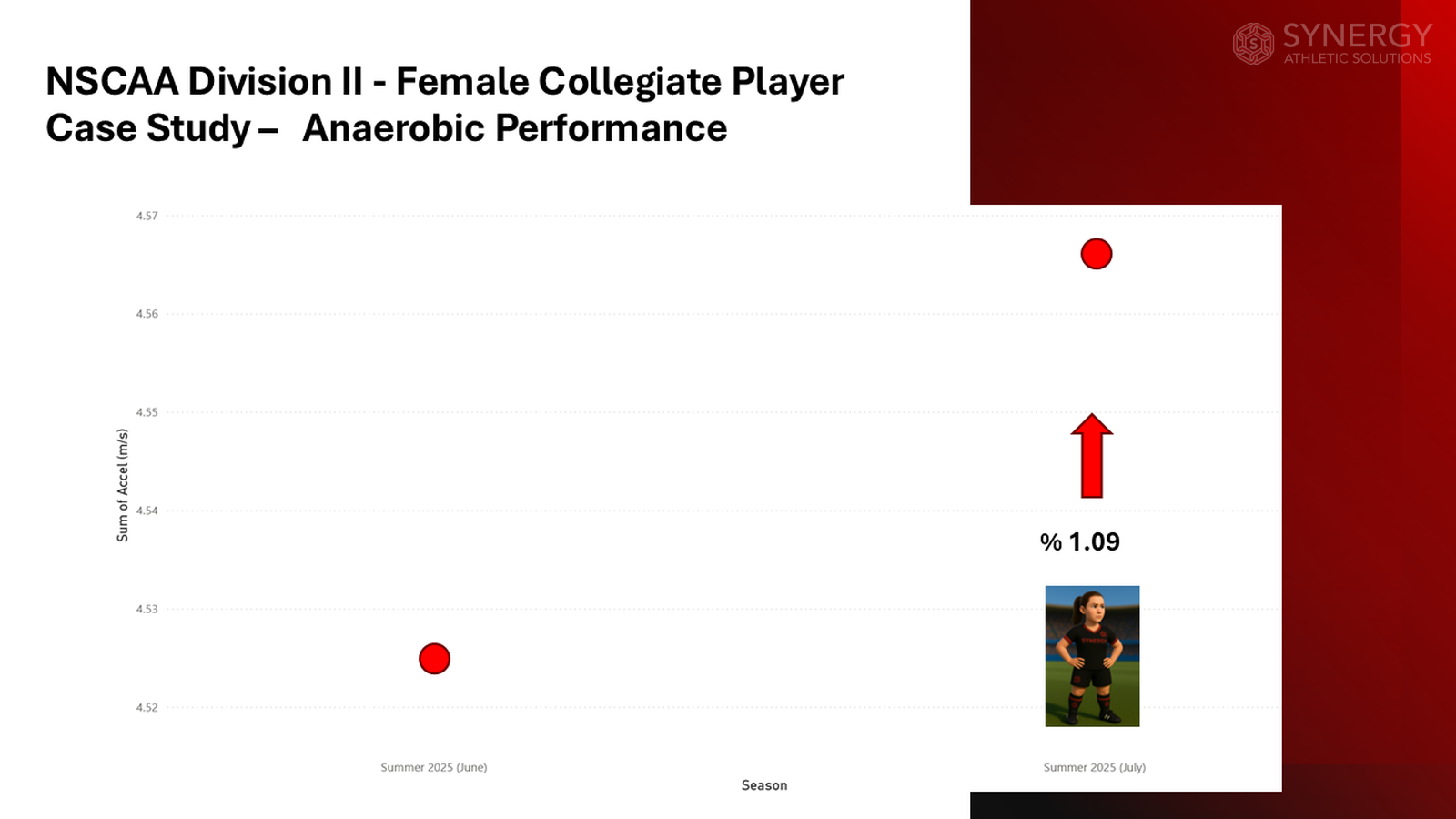
Acceleration Increase: +1.09%
This translates to faster reaction to game cues and improved first-step explosiveness.
Anaerobic Performance: Sprint Speed
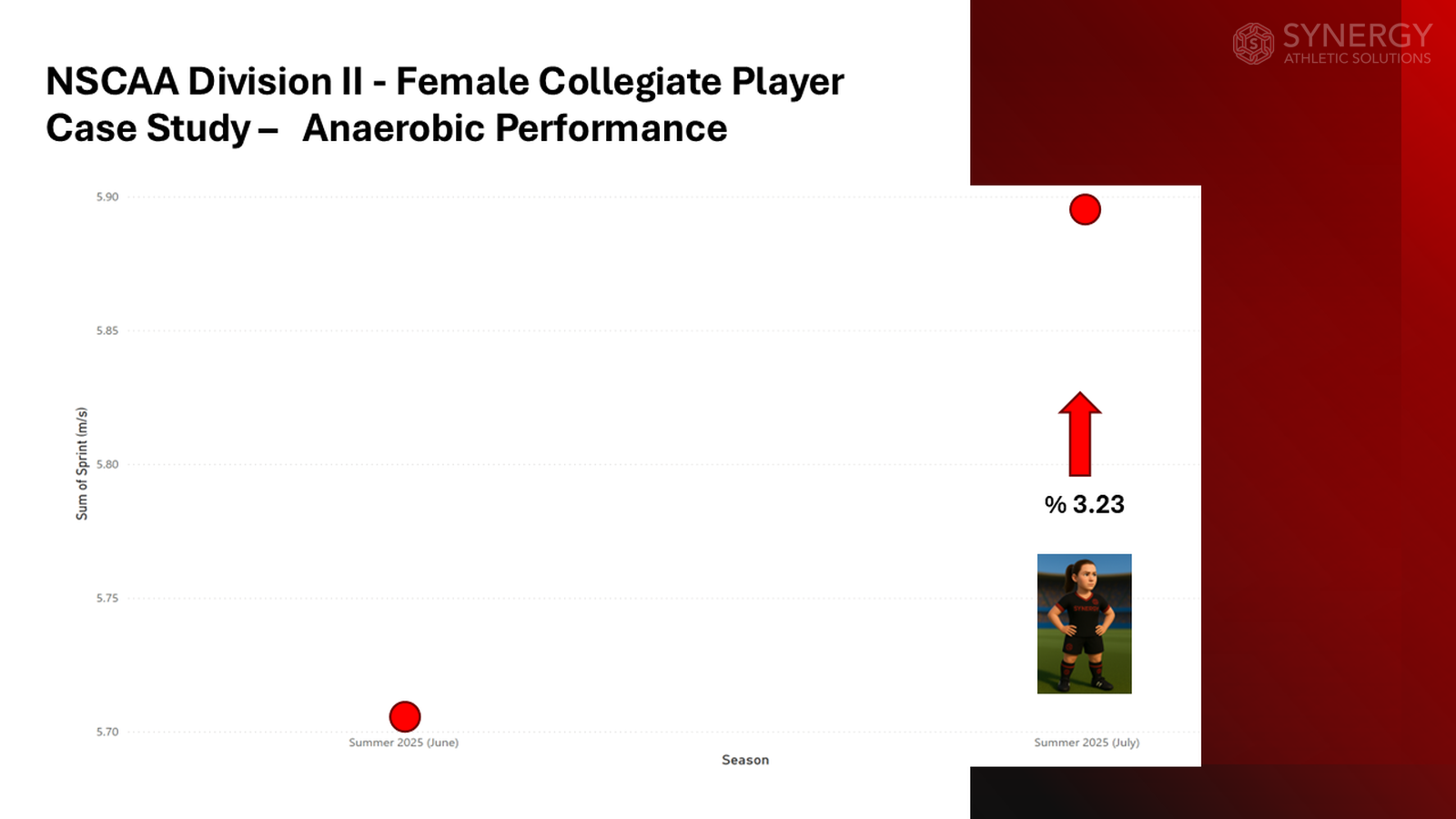
Top Speed Increase: +3.23%
Enhanced maximum sprinting velocity—a critical match-deciding variable.
Anaerobic Performance: Agility + Change of Direction
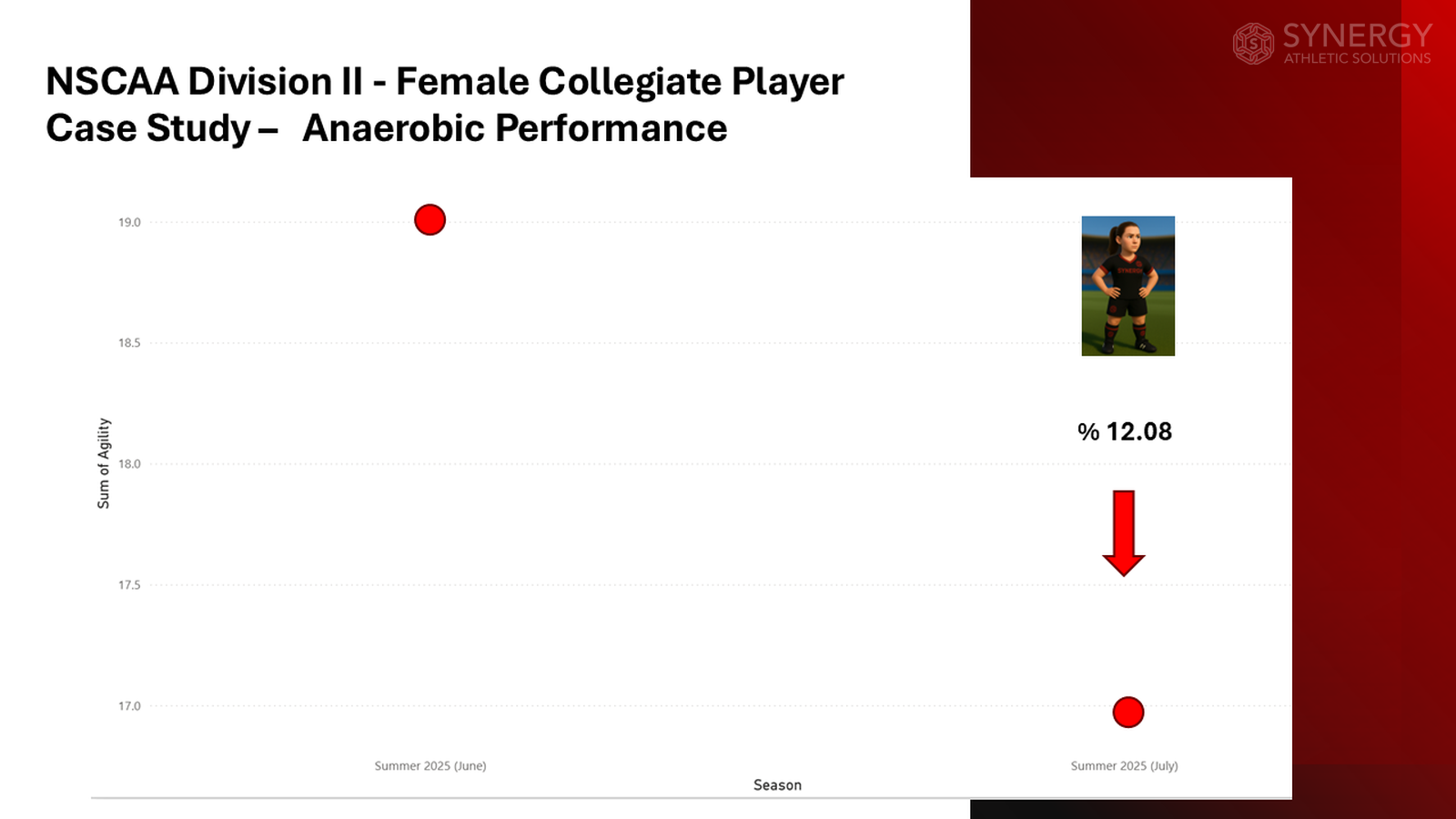
Agility Improvement: +12.08%
A meaningful reduction in change-of-direction time, reflecting better braking, re-acceleration, and responsiveness.
Biometric Change
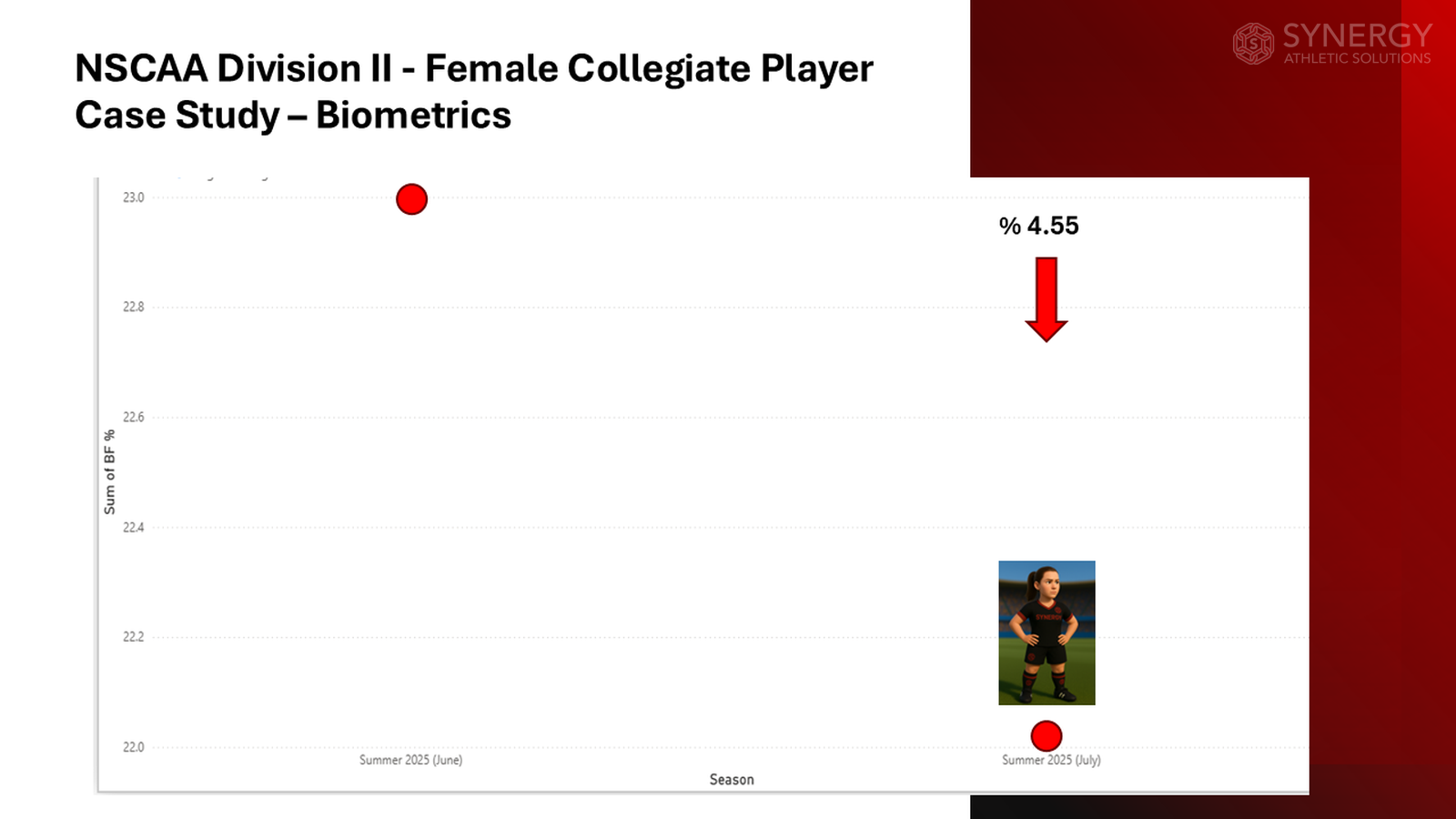
Body Fat Reduction: –4.55%
A positive shift supporting efficiency, speed, and overall readiness.
Internal Physiological Factors That Influence Soccer Performance
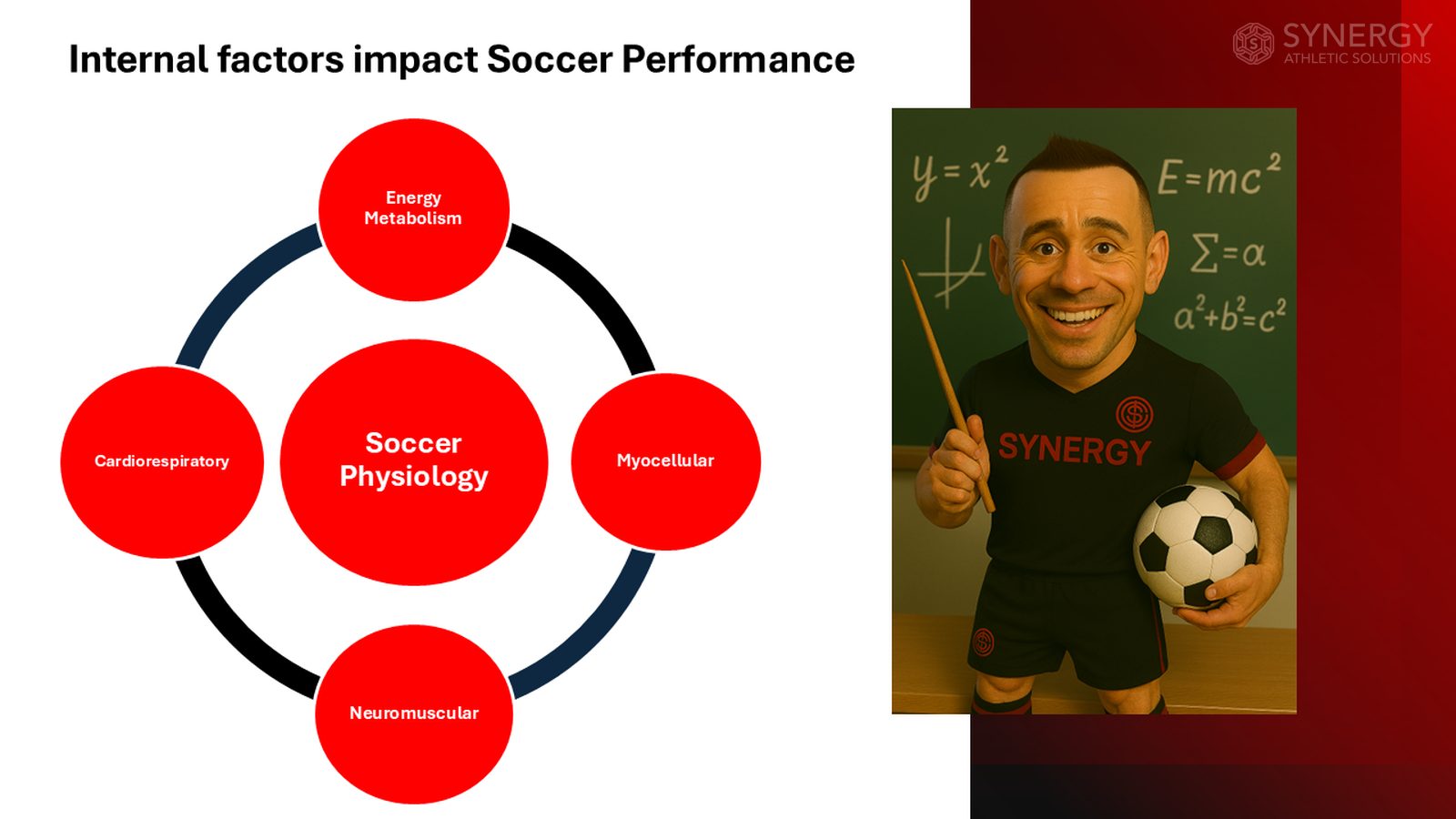
Internal systems govern how athletes respond and adapt to training:
1. Cardiorespiratory
Oxygen delivery, CO₂ removal, aerobic power
2. Energy Metabolism
Fuel utilization, recovery rate, efficiency
3. Neuromuscular
Explosiveness, movement patterning, power output
4. Myocellular
Muscle fiber composition, mitochondrial density, tissue turnover
Understanding these mechanisms allows for more informed training prescription and periodization.
Neuromuscular Performance: Jump Height
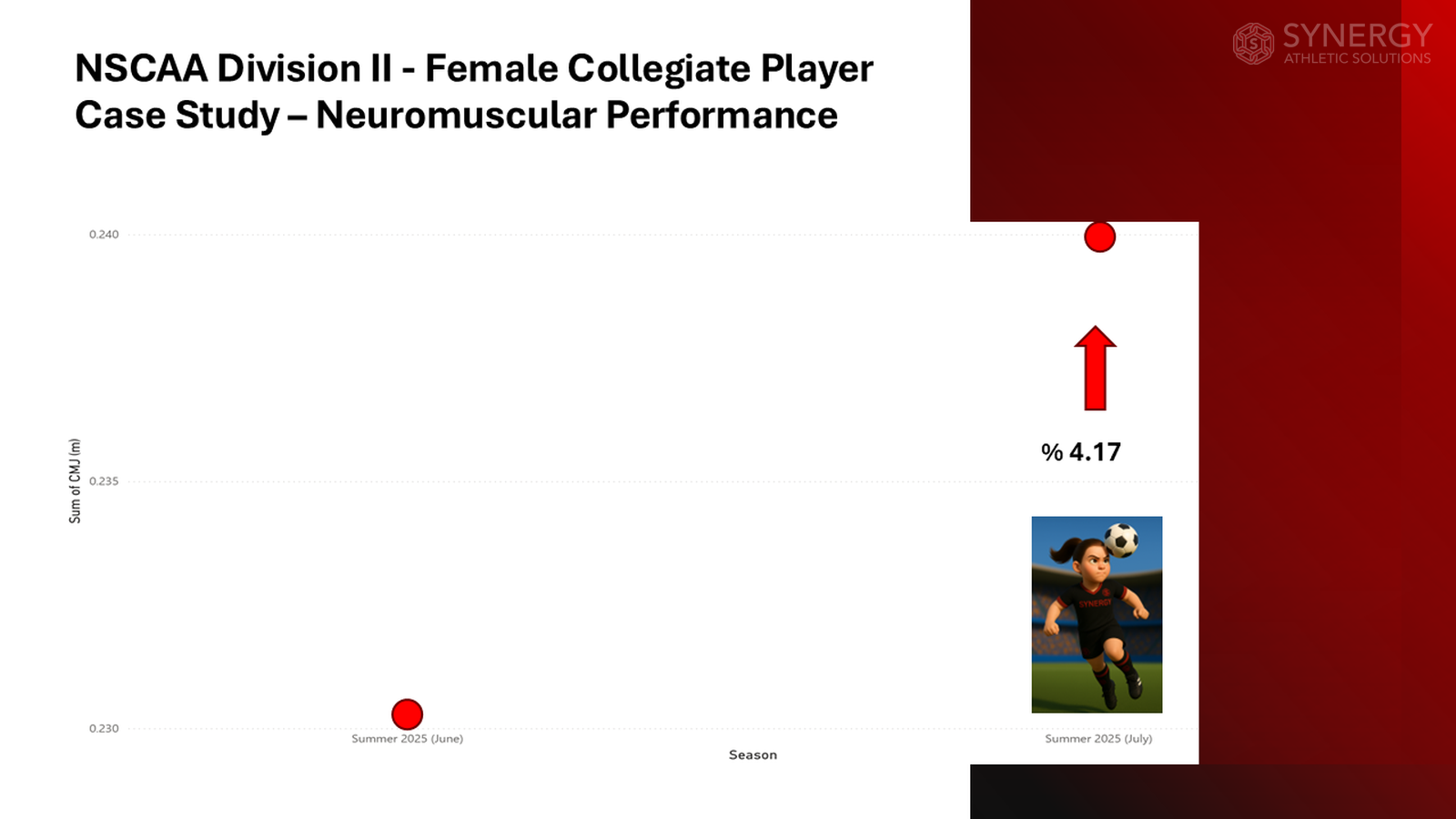
Countermovement Jump (CMJ) Height: +4.17%
Indicates improved lower-body power and neuromuscular coordination.hr>
Neuromuscular Performance: Eccentric Rate of Force Development
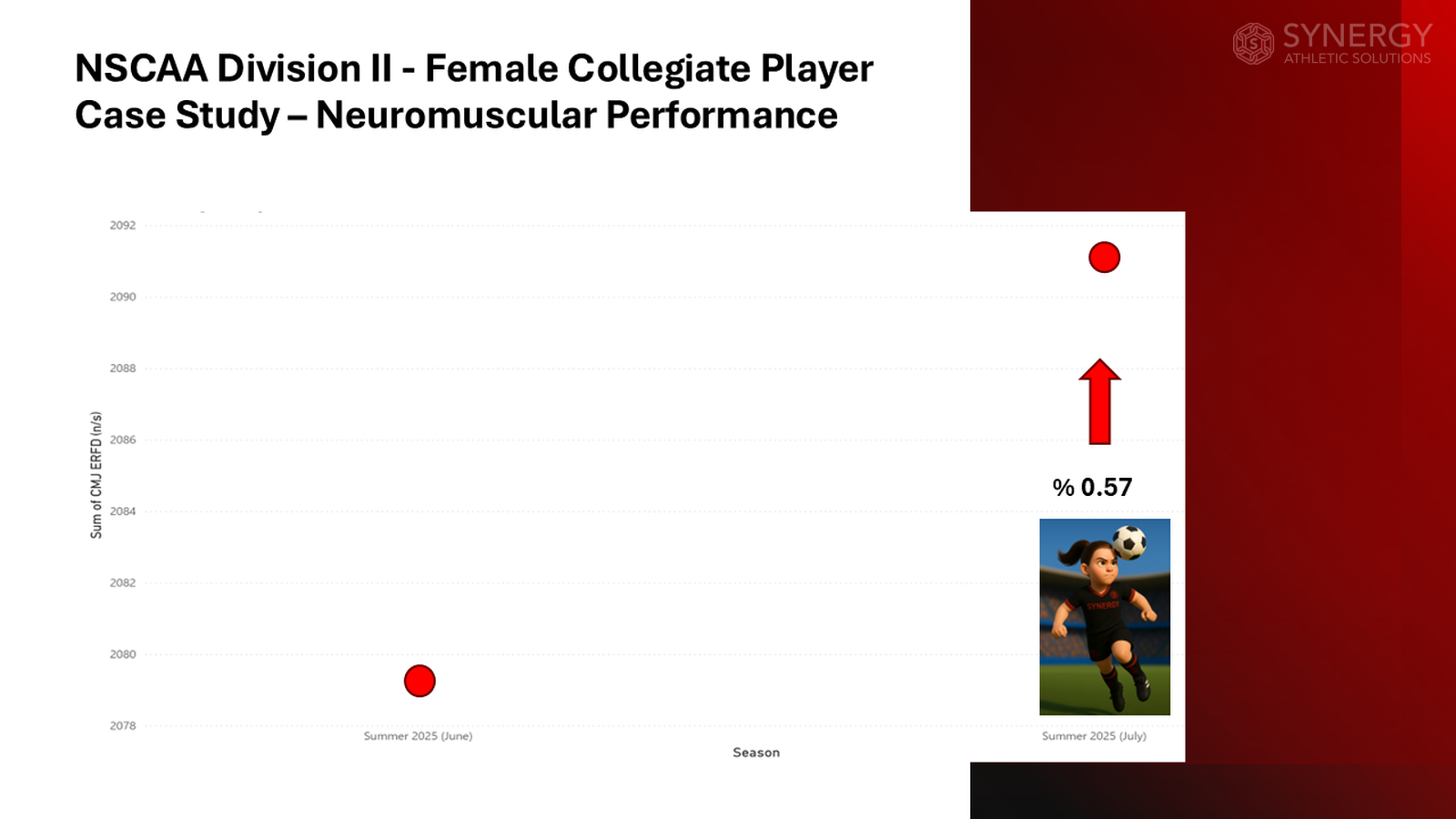
ERFD Increase: +0.57%
Reflects better braking and re-loading efficiency—important for agility and injury reduction.
Neuromuscular Movement Strategy
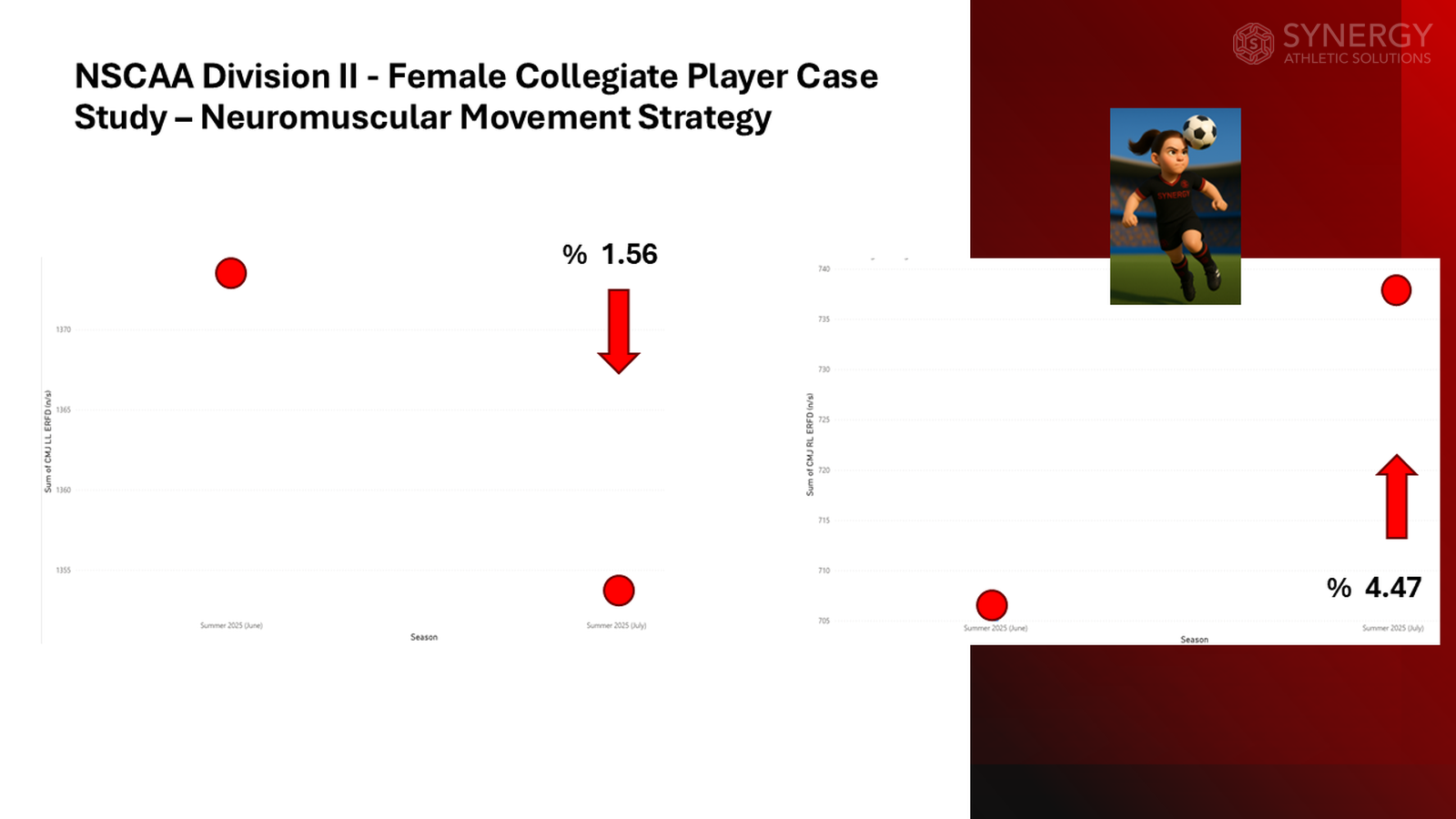
Left Leg ERFD: –1.56%
Right Leg ERFD: +4.47%
The right leg (previously reconstructed knee) showed positive adaptation, while the left leg—though still stronger—showed a slight reduction.
This illustrates the value of monitoring asymmetries and compensatory strategies during return-to-play.
Nutritional Factors Impact Soccer Performance
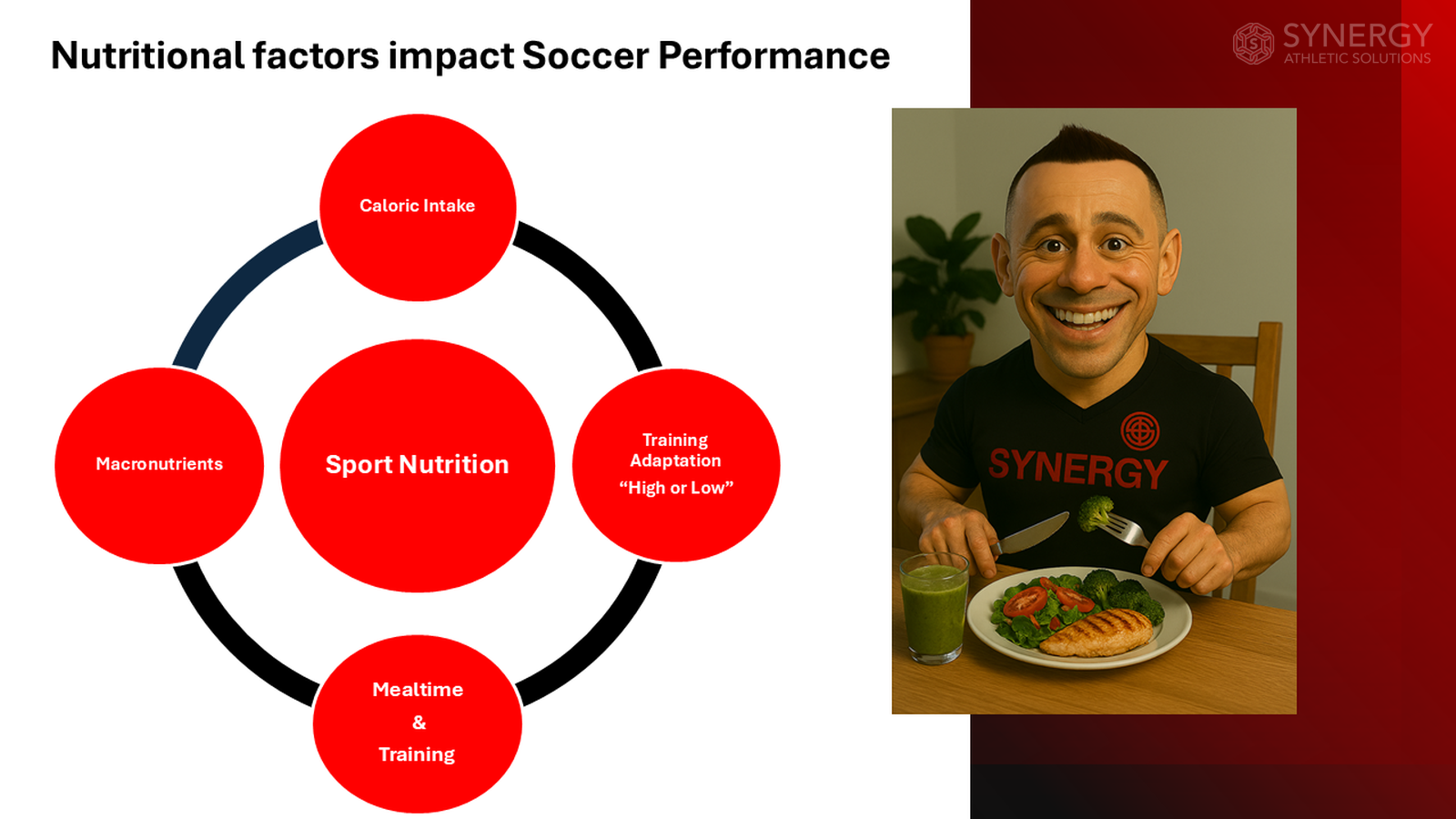
Nutrition governs:
-
- Training adaptation
- Recovery
- Mental clarity
- Body composition
- Day-to-day energy availability
Key considerations include:
-
- Caloric intake
- Macronutrient balance
- Meal timing around training
- Cultural and personal dietary preferences
Other External Factors: Biomechanics
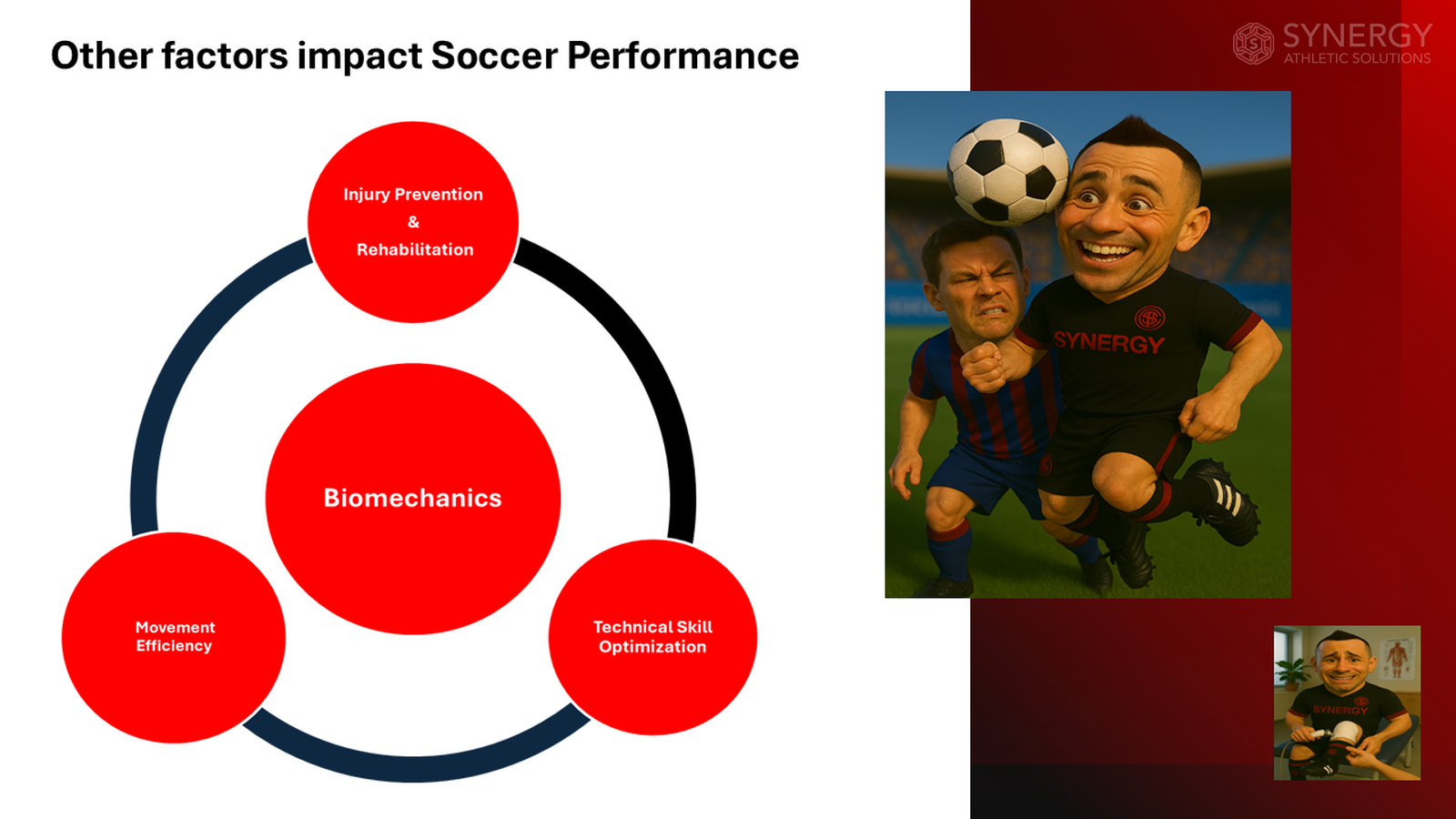
Biomechanics affects:
-
- Injury prevention
- Rehabilitation
- Technical skill efficiency
- Movement quality
Understanding an athlete’s movement patterns can identify inefficiencies, reduce injury risk, and accelerate technical development.
Lessons Learned
-
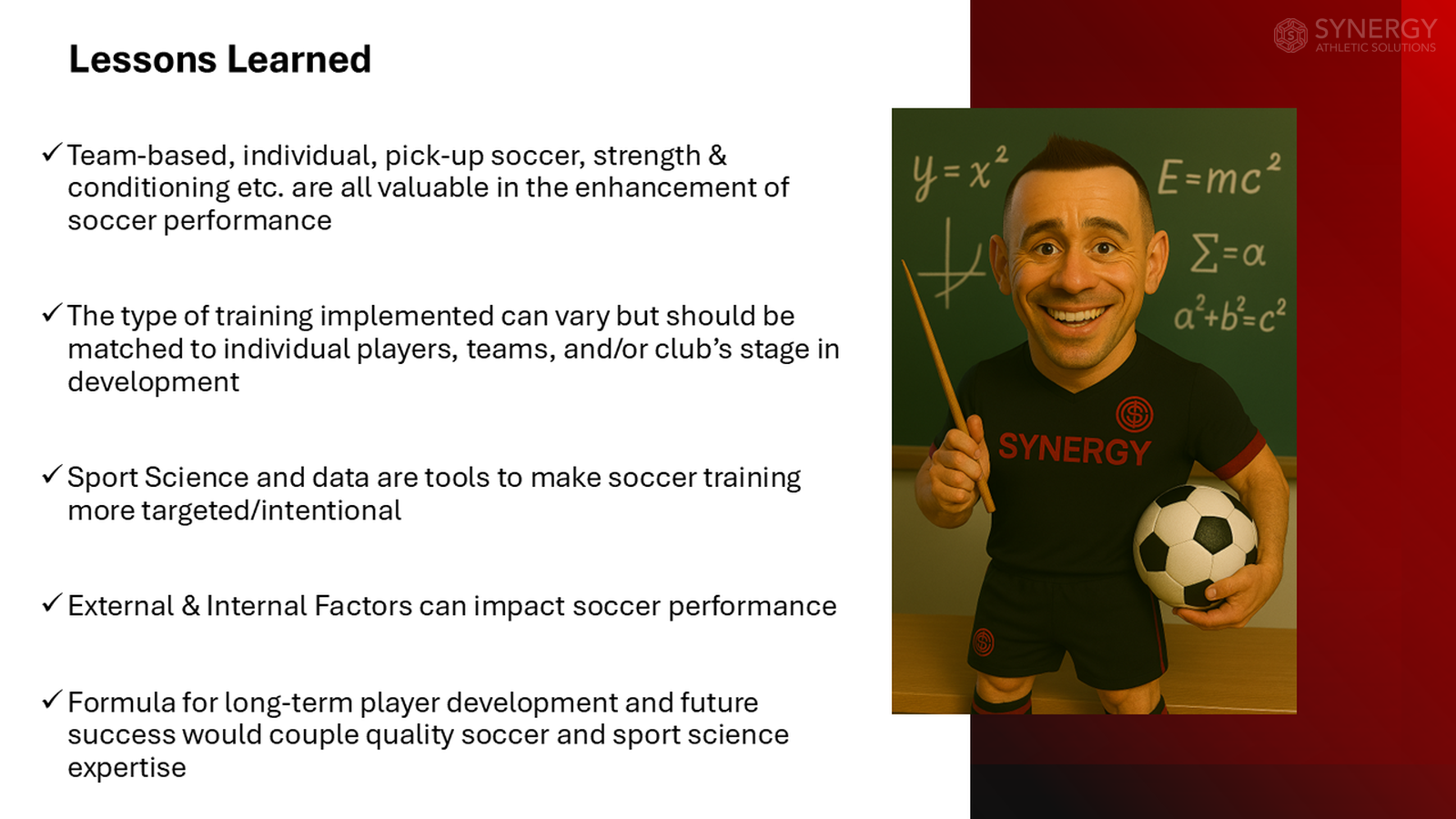
- All forms of training are valuable—team-based, individual, small-group, pick-up, S&C
- Training must match the player’s goals, stage of development, and context
- Sport science enhances precision, not complexity
- Both internal and external factors shape performance
- Long-term success requires synergy between soccer expertise and sport science
Conclusion
Soccer development is a long-term process involving strategic planning, intentional training, and an understanding of human physiology. When art (coaching) and science (performance analysis) work together, players experience the most complete and sustainable growth.
Thank you for taking the time to explore this performance journey.
To stay connected and learn more:
📱 Follow Synergy Athletic Solutions on Instagram & YouTube
📝 Visit our website blog for more insights, research, and applied sport science content
📩 Reach out directly to collaborate or inquire about training services