
Soccer Training, Competition Level, and Player Development: Why Training Environments Matter More Than We Think
By Dr. Joshua Villalobos, PhD
Founder, Synergy Athletic Solutions
STRIKES™ Applied Sport Science
INTRODUCTION: Performance Differences Do not Start on Game Day
In soccer, differences between levels of competition are often explained by what happens during matches.
Higher-level players:
- Run more
- Perform at higher intensities
- Execute skills more efficiently
But these differences don’t start on game day.
They are built through training exposure over time.
Match Demands Reflect Training Exposure
Research consistently shows that higher-level players:
- Cover greater total distance
- Perform more high-intensity efforts
- Maintain technical performance under fatigue
These differences are often interpreted as talent.
But performance is not just ability.
It is adaptation to training environments.
The Missing Link: Training Environment
Most research compares match outputs.
But one critical factor is often overlooked:
The training environment
Players at higher levels are not just better.
They have been exposed to:
- Higher intensity demands
- More complex decision-making
- Greater tactical challenges
Over time, this exposure shapes performance.
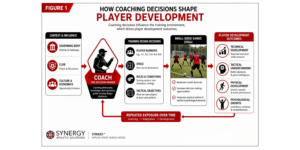
Figure 1. Coaching decisions shape training design, which influences small-sided games, repeated exposure, and ultimately player development outcomes
Training as the Driver of Adaptation
Training is not just preparation.
It is the primary driver of adaptation.
Every session creates:
- Stimulus
- Response
- Adaptation
Repeated over time, this determines development.
Performance is not observed.
It is produced.
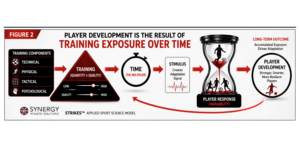 Figure 2. Player development is the result of training quantity and quality interacting with time to produce adaptation through individual player response.
Small-Sided Games and Competitive Level
Small-sided games (SSGs) are widely used because they:
- Replicate match demands
- Increase decision-making
- Integrate physical, technical, and tactical elements
But effectiveness depends on:
- Design
- Constraints
- Exposure
Not all SSGs produce the same development outcomes.
Technical-Tactical Development Still Matters
Higher-level players demonstrate:
- More efficient decision-making
- Better technical execution
- Greater consistency under pressure
Development is multi-dimensional.
Physical outputs alone do not explain performance differences.
Individual Variability Must Be Accounted For
The same training session does not produce the same outcome for every player.
Differences in:
- Physical capacity
- Tactical understanding
- Psychological state
- Experience
…all influence adaptation.
Development is not uniform. It is individual.
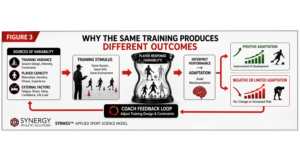
Figure 3. The same training environment produces different outcomes due to individual variability. Coaching interpretation and feedback determine long-term development.
Implications for Coaches and Organizations
If training environments differ across levels, we must ask:
- What are players exposed to?
- How often?
- How representative is training?
Are we preparing players for their current level…
Or their future level?
The Synergy Athletic Solutions Approach
At Synergy Athletic Solutions, we design training environments that:
- Align with long-term development
- Replicate competition demands
- Integrate performance domains
- Account for individual variability
Because development is not accidental.
It is designed.
Conclusion: Development Is an Accumulated Process
Player development is the result of:
- Training exposure
- Time
- Environmental constraints
Improving development does not begin with better selection.
It begins with better environments.
📺 Explore more STRIKES™ Applied Soccer Sport Science content
👉 https://www.youtube.com/channel/UCRZkYLDVE6-SVs67jzJN7Yg
📥 Download the original research
👉 Soccer Training Environments and Player Development: A STRIKES™ Applied Sport Science Framework
⚽ Partner with Synergy Athletic Solutions
👉 https://synergyathleticsolutions.com/
© 2026 Copyright Synergy Athletic Solutions. All Rights Reserved.