
From Participation to Professional Pathways: How System Design Shapes Talent Development in Soccer
By Dr. Joshua Villalobos, PhD
Founder, Synergy Athletic Solutions
STRIKES™ Applied Sport Science
Introduction: Talent Development Is a System, Not a Stage
Talent development in soccer is often discussed as though it begins once a player enters an academy environment. Development outcomes are shaped long before structured training ever begins. Participation access, economic constraints, organizational design, and competitive alignment all influence who remains in the system long enough to benefit from development.
Drawing from applied research and STRIKES™ Applied Sport Science principles, this article examines how system design rather than player potential alone shape talent outcomes. We explore how structural differences between development models and progressive attrition across the pathway narrow the effective talent pool.
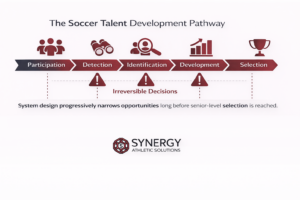
Structural Models of Talent Development: American vs. European Systems
Youth soccer development systems differ substantially in their objectives, incentives, and resource allocation. Research consistently shows that European club-funded models prioritize long-term integration with the professional game, while many American systems operate under pay-to-play and participation-driven frameworks.
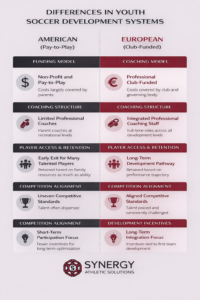
Figure 1. Structural Differences in Youth Soccer Development Systems
This comparison highlights several system-level contrasts:
- Funding Models: Pay-to-play participation versus club-funded development
- Coaching Structures: Parent-led and part-time coaching versus integrated professional staff organization
- Access & Retention: Early exit driven by financial and selection pressure versus long-term pathways
- Competition Alignment: Dispersed competitive standards versus pooled, developmentally aligned competition
- Incentives: Short-term participation metrics versus long-term professional integration
These differences shape not only who enters development environments, but who remains within them.
Attrition as a System Outcome
Talent loss in soccer is often attributed to individual failure or lack of resilience. However, research and applied observation suggest that attrition more accurately reflects system constraints than true player potential.
At each transition point: 1. club entry 2. team selection 3. competitive stratification 4. development and 5. academy progression, the system filters players based on access, timing, and short-term performance indicators.
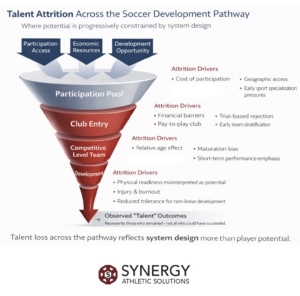
Figure 2. Talent Attrition Across the Soccer Development Pathway
This funnel illustrates how the player pool progressively narrows:
- Participation Pool – Influenced by access, geography, and socioeconomic factors
- Club Entry – Constrained by pay-to-play structures and trial-based selection
- Competitive-Level Teams – Shaped by maturation bias and relative age effects
- Development Environments – Limited tolerance for non-linear development trajectories
The players who reach advanced stages represent those who remained, not necessarily those with the greatest long-term potential.
Why System Design Matters More Than Early Prediction
Talent development is not optimized by perfect identification alone. It requires systems that:
- Maintain broad participation pools
- Delay irreversible selection decisions
- Align competition with developmental readiness
- Support late developers and non-linear trajectories
When systems prioritize early performance over long-term adaptation, they risk excluding players whose potential emerges later.
STRIKES™ Applied Sport Science Perspective
Within the STRIKES™ framework, talent development is viewed as an adaptive process constrained by system design. Applied sport science should help organizations ask:
- Who has access to development environments?
- Where does attrition occur and why?
- Are incentives aligned with long-term performance or short-term outcomes?
- How tolerant is the system of uncertainty and delayed maturation?
Optimizing development does not require eliminating uncertainty. It requires designing systems that work with it.
Conclusion: Talent Outcomes Reflect the System
Talent development outcomes in soccer reflect the structures, incentives, and constraints of the systems in which players operate. Attrition is not merely an individual phenomenon. It is a design feature.
Organizations seeking sustainable development pathways must look beyond selection decisions and examine the environments that shape participation, retention, and opportunity over time.
Talent is not lost randomly. It is filtered by design.
📺Explore more STRIKES™ Applied Soccer Sport Science Channel:
👉 https://www.youtube.com/channel/UCRZkYLDVE6-SVs67jzJN7Yg
📥 Download the orginal research:
👉Talent Development System Design in Youth Soccer | STRIKES™
⚽ Partner with Synergy Athletic Solutions:
👉 https://synergyathleticsolutions.com/