
Soccer Training and the Adaptation Process: How Small-Sided Games Shape Player Development
By Dr. Joshua Villalobos, PhD
Founder, Synergy Athletic Solutions
STRIKES™ Applied Sport Science
Introduction: Training Drives Adaptation
In previous STRIKES™ Applied Sport Science discussions, we examined how training environments function as the primary context for player development.
Small-sided games were introduced as representative learning environments. Training structures that integrate technical, tactical, and physical demands within a single activity.
However, understanding why these environments are effective requires a deeper examination of the adaptation process they generate.
Training does not simply expose players to the game.
It alters their physiological, physical, and behavioral capacities over time.
Small-sided games are effective because they systematically manipulate the demands placed on players, producing specific adaptations that transfer to match performance.
To understand how training drives development, we must first understand the system in which it operates.
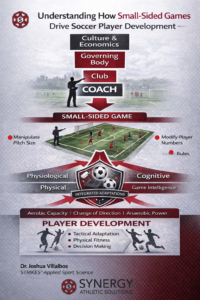
Figure 1. Soccer Development System Model. Organizational structure influences coaching, training design, and small-sided game environments that shape player development outcomes.
Small-Sided Games as Adaptive Stimuli
From an applied sport science perspective, small-sided games function as multi-dimensional training stimuli.
They simultaneously influence:
- Physiological systems
- Movement patterns
- Decision-making processes
- Technical execution under pressure
Research demonstrates that SSGs can improve:
- Aerobic capacity
- Anaerobic performance
- Change of direction ability
- Recovery between repeated efforts
- Metabolic conditioning
These adaptations emerge not from isolated repetition, but from continuous interaction with game constraints.
Players are not simply practicing actions.
They are adapting to demands.
How Game Design Alters Adaptation
A central principle within the STRIKES™ framework is that:
Adaptation is constraint dependent.
In small-sided games, coaches manipulate constraints that directly influence the type and magnitude of adaptation.
Key variables include:
- Number of players
- Pitch dimensions
- Tactical rules
- Game objectives
Each adjustment modifies both external load (movement demands) and internal load (physiological response).
Smaller Formats (≤ 4v4): High Physiological Load and Repetition
Small-format games consistently produce:
- Higher heart rate responses
- Elevated blood lactate levels
- Increased perceived exertion
- Greater frequency of technical actions
These environments emphasize:
- Repeated accelerations and decelerations
- Rapid decision-making under pressure
- High-intensity metabolic stress
As a result, they are particularly effective for developing:
- Anaerobic capacity
- Short-duration intensity tolerance
- Technical execution under fatigue
Larger Formats (5v5 – 11v11): High-Speed and Locomotor Demands
As pitch size and player numbers increase, the adaptive stimulus shifts.
Players experience:
- Greater total distance covered
- Increased high-speed running
- More sprint exposure
These formats better reflect:
- Match-specific locomotor demands
- Tactical spacing and positional behavior
The primary adaptations include:
- Speed endurance
- High-speed running capacity
- Game-specific movement efficiency
Integrating Small-Sided Games with High-Intensity Training
While small-sided games provide an effective stimulus independently, combining SSGs with high-intensity interval training (HIIT) enhances:
- Aerobic development
- Repeated sprint ability
- High-intensity running performance
This highlights an important applied principle:
No single training method produces all adaptations.
Effective training systems layer multiple stimuli across the training cycle to target complementary performance qualities.
Individual Variability in Training Response
Not all players respond to small-sided games in the same way.
Adaptation is influenced by:
- Biological maturation
- Physical capacity
- Technical proficiency
- Gender-specific physiological differences
For example, research has shown differences in locomotor output and intensity profiles between players during SSGs.
This reinforces the need for:
- Contextual interpretation of training data
- Individualized load management within team environments
Training design must account for variability rather than assume uniform response.
Development is not linear—and it is not the same for every player.
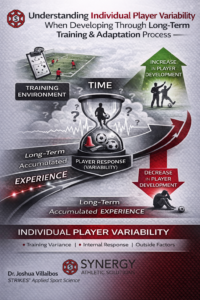
Figure 2. Individual Player Adaptation Model. Training environments produce variable responses across players over time, influencing long-term development trajectories positively or negatively.
Training Design as a Mechanism for Development
Within the STRIKES™ Applied Sport Science model, training environments are viewed as systems that produce adaptation over time.
Small-sided games illustrate how:
- Constraints shape behavior
- Behavior drives physiological demand
- Physiological demand produces adaptation
Over repeated exposure, these adaptations influence:
- Performance capacity
- Tactical decision-making
- Movement efficiency
Training is not simply preparation.
It is development in action.
STRIKES™ Applied Sport Science Perspective
Small-sided games are often discussed as tools for improving engagement or increasing touches on the ball.
While these outcomes are important, they do not fully explain their value.
Within the STRIKES™ framework, SSGs are understood as:
Adaptive environments that integrate physical, technical, and tactical development through constraint manipulation.
Their effectiveness depends not on their presence in training, but on:
- How they are designed
- What constraints are emphasized
- Which adaptations are targeted
When aligned with long-term development goals, SSGs provide a structured pathway for building adaptable, resilient players.
Conclusion: Adaptation Defines Development
Small-sided games have become central to modern soccer training because they recreate the demands of competition while allowing for controlled manipulation of training variables.
Their true value lies in their ability to generate specific, repeatable adaptations that influence player performance over time.
Selection determines access to development systems.
Training determines the adaptations those systems produce.
Improving player development requires more than increasing training volume or replicating match conditions.
It requires understanding how training environments shape adaptation.
And in soccer, those environments are built through the design of small-sided games.
📺 Explore more STRIKES™ Applied Soccer Sport Science content
👉 https://www.youtube.com/channel/UCRZkYLDVE6-SVs67jzJN7Yg
📥 Download the original research
👉 Small-Sided Games in Soccer Training: Sport Science Insights on Adaptations and Player Development
⚽ Partner with Synergy Athletic Solutions
👉 https://synergyathleticsolutions.com/