
STRIKES™ Applied Sport Science
Talent Is Not Developed in Isolation:
Why Training Environments and Systems Matter in Soccer Player Development
By Dr. Joshua Villalobos, PhD
Founder, Synergy Athletic Solutions
Rethinking Talent in Soccer
Talent in soccer is often discussed as if it were an internal, fixed attribute—something a player either possesses or does not. This perspective continues to influence scouting practices, academy selection, and long-term development strategies across the sport.
However, decades of research challenge this simplified view.
Evidence suggests that success in soccer is rarely the result of talent alone. Instead, it often emerges from a chance alignment between an individual’s capabilities and the environments they are exposed to over time. These environments—training, competition, coaching, and social context—quietly compound, shaping player development across the lifespan.
Talent, therefore, should not be viewed in isolation. It is expressed, constrained, and amplified by the environments in which players train and compete.
The Multifactorial Nature of Soccer Player Development
A player’s progression from youth to professional soccer is multifactorial and complex. Research consistently highlights the influence of social and structural factors such as:
- Club organization and philosophy
- Coaching quality and training methodology
- Team level and competition standard
- Selection practices and pathway stability
- Family and socioeconomic context
These factors vary widely between players, yet collectively exert a significant influence on long-term development. Early and chronic exposure to higher-quality training environments and competition may be advantageous, but access alone does not guarantee positive adaptation.
This raises a critical issue for modern soccer development:
We still have a limited understanding of how training environments actually drive adaptation.
Training Exposure vs. Training Quality
Soccer clubs invest heavily in talent development systems. Players are routinely placed into “top teams,” elite leagues, and advanced tactical environments under the assumption that higher levels automatically produce better players.
Yet this assumption is rarely interrogated.
Key questions often remain unanswered:
- What type of training stimulus are players chronically exposed to?
- How do different coaching methodologies influence physical, tactical, and cognitive adaptation?
- Are systems genuinely developing players—or simply selecting those who survive existing demands?
A team’s competitive level does more than influence match outcomes. It defines the daily training stimulus players adapt to over extended periods of time.
Without understanding this stimulus, talent development becomes reactive rather than intentional.
The Talent Paradigm: Detection, Identification, Development, and Selection
Talent in soccer is not static. Across a player’s career, performance is continuously evaluated through interconnected but distinct processes:
- Talent Detection: Identifying potential players outside formal club structures
- Talent Identification: Recognizing players suited for higher-level competition
- Talent Development: Creating training environments that cultivate athletic potential
- Talent Selection: Choosing players for inclusion at specific competitive levels
While interconnected, these processes serve different purposes. Critically, talent development is the only process directly responsible for shaping long-term adaptation.
Recent conceptual frameworks emphasize two key realities:
- Soccer performance and talent are temporal, continuously changing and re-evaluated
- Player advancement, sustainment, or regression is partly dependent on the training environment and competition level experienced over time
Soccer player development does not occur within a single team, coach, or training program. Instead, it unfolds within a layered system of influences that extend from cultural and family contexts to team environments, club structures, governing bodies, and broader economic forces. Understanding how these levels interact is essential for designing training environments that support long-term development rather than short-term selection outcomes.
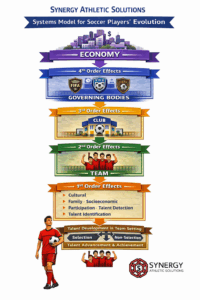
Figure 1. Systems Model for Soccer Players’ Evolution
This model illustrates the multi-layered systems influencing soccer player development, from first-order effects such as cultural background, family socioeconomic context, participation, and talent identification, through team- and club-level environments, up to governing bodies and broader economic forces. Player advancement, selection, and long-term achievement emerge from continuous interaction between these system levels, emphasizing the central role of training environment quality and organizational decision-making in talent development.
This systems-based perspective highlights why player development outcomes cannot be attributed solely to individual talent or training volume. Decisions made at each system level—from family access and early participation to team-level coaching methodology, club philosophy, and broader governing and economic structures—shape the training stimuli players are exposed to over time.
Importantly, these systems do not operate independently. Misalignment between levels can limit development, while intentional alignment can enhance adaptation and progression. Talent development should therefore be viewed not as a linear pipeline, but as a dynamic process shaped by interacting environmental constraints.
Why Applied Sport Science Must Evolve
Within the STRIKES™ Applied Sport Science framework, data and evidence are used not as endpoints, but as decision-making tools to intentionally shape training environments and long-term development systems.
Traditional approaches to player development have emphasized:
- Training volume
- Physical intensity
- Match outcomes
While important, these indicators alone provide an incomplete understanding of development.
Applied sport science must move beyond monitoring and reporting toward evidence-based decision-making that informs:
- Training design
- Coaching methodology
- Tactical and structural organization
- Competition exposure
- Long-term pathway planning
Data and research are only valuable when they shape decisions and improve environments.
If data does not change a decision or improve a training environment, it is not applied sport science.
Designing Better Environments for Long-Term Player Development
Talent development is not about doing more work. It is about doing the right work, in the right environment, at the right time.
For clubs and practitioners, this requires:
- Clearly defining what “quality training” means within their context
- Aligning coaching methodology with intended player outcomes
- Evaluating training exposure, not just workload metrics
- Designing environments that support sustainable adaptation rather than early selection
This is where applied sport science provides its greatest value—as a framework for intentional environment design, not simply performance monitoring.
Conclusion
Talent in soccer does not emerge in isolation. It develops within systems shaped by decisions, environments, and structures over long periods of time.
To move player development forward, the industry must shift from asking who is talented to understanding how environments develop talent. This requires collaboration between coaches, sport scientists, and organizations—guided by evidence, grounded in context, and focused on long-term outcomes.
At Synergy Athletic Solutions, we support clubs and practitioners in designing training environments that foster sustainable player development through STRIKES™ Applied Sport Science.
Because better environments create better players.
📺 Watch the STRIKES™ Applied Soccer Sport Science Channel:
👉 https://www.youtube.com/channel/UCRZkYLDVE6-SVs67jzJN7Yg
📥 Download the orginal research:
👉 The Effect of Team Competition Level on Soccer Training Environments and Player Development: An Applied Sport Science Perspective
⚽ Partner with Synergy Athletic Solutions:
👉 https://synergyathleticsolutions.com/